
India Edges Japan in T20I Cricket Match After Controversial Finish
This article was drafted with Citeya, an AI writing tool, from published reports and is published under Kishan Prajapat's name. See our editorial standards or report an error.
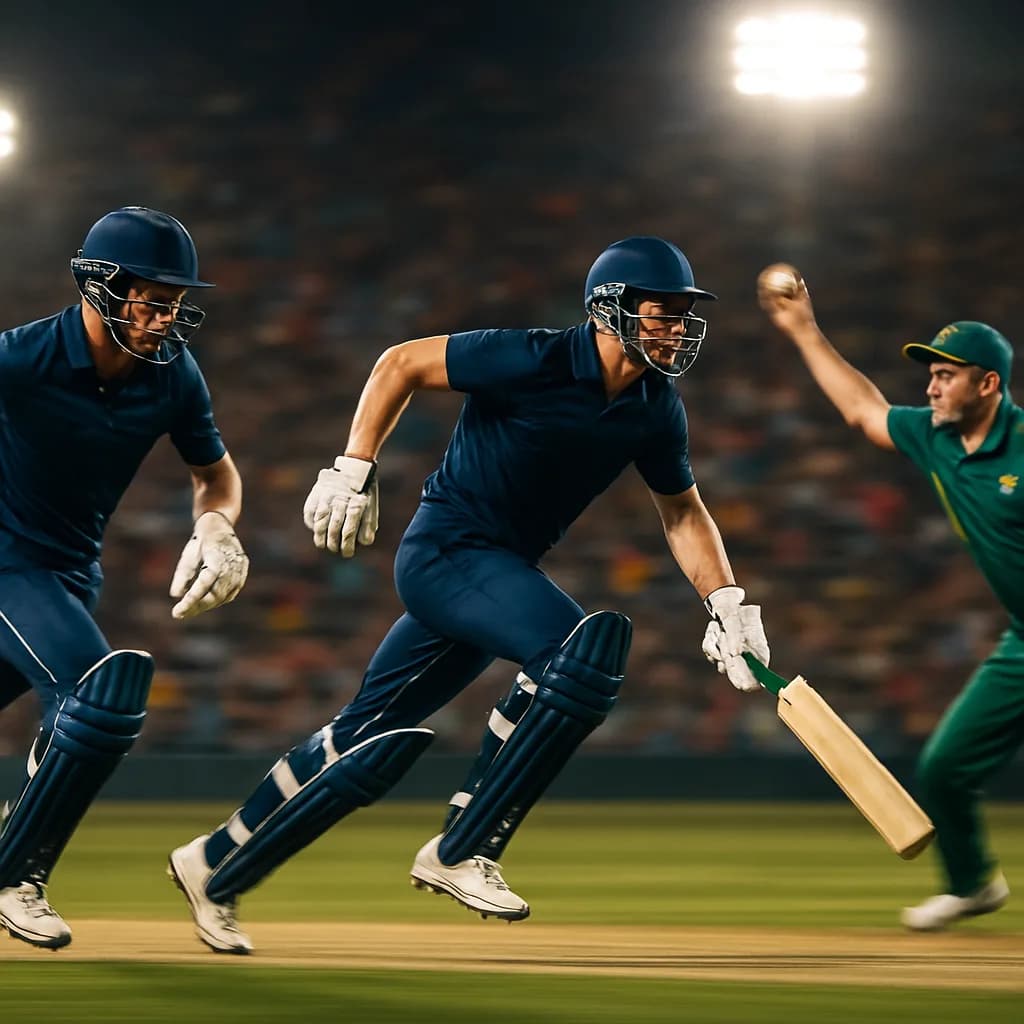
Representative image for illustration
A late run-out and a nail-biting final over decided a game that came down to tiny margins, India just shaded Japan in a tense T20I.
The match opened with brisk hitting. India posted a competitive total, Japan responded with spirited batting, and the contest boiled down to the last over. Really, it came down to split-second fielding and one marginal call, the kind of moment that gets people shouting about review thresholds.
Match Summary: What Happened On The Day
India batted first and set a target that looked defendable but not overwhelming. A dominant partnership lifted India past 160, and a late slog from the lower order tacked on a few handy runs. Japan's chase began cautiously, then accelerated, with a middle-order stand keeping them within reach.
The final five overs defined the contest. India conceded more than expected in that phase, and Japan still fell just short when the last run-out was given.
Key Moments And Player Data
An opening 40 from India's top order gave them momentum, and a second-wicket stand worth roughly 75 runs turned a fair start into a commanding one. In the death overs, India scored at about 10 runs an over, a figure teams aim for in T20 cricket.
Japan's reply included a crucial 50-run partnership that cut the required rate, and the chase reached the penultimate over with only a handful to get. The major statistical swings appeared in the 16th to 20th overs, with both teams seeing their economy rates change by multiple runs per over.
A single run-out, executed cleanly in the final over, removed Japan's on-fire batter and effectively ended the chase. Fans noticed that the match featured more wides and no-balls than usual, and those extras contributed to the drama.
Umpiring, Review Protocols And The Controversy Explained
Officials went to the standard third-umpire checks to see if bat or ground was down first, but the replays left plenty of viewers unconvinced. Officials said that reviews operate on a 'pathway of certainty' rather than a 'balance of probabilities', which means the third official needs clear evidence to overturn an on-field call. That pathway rule is central to most international review protocols.
At the core is plain old human perception. Replays can be ambiguous because camera angles and frame rates vary. Experts say that cricket's referral protocols favor the on-field decision when video evidence is unclear. It’s meant to stop decisions being flipped on what are basically shaky pixels.
Still, coaches and broadcasters pushed for clearer protocols for ultra-close calls.
Why This Result Matters
The match wasn't just a one-off warm-up. The result affects confidence and selection. Emerging-player pathways rely on performances in matches like this, and a narrow loss can accelerate a young nation's learning curve. Honestly, I think matches like this are the fastest way for teams to learn how to close games under pressure.
Officials noted that narrow defeats often lead to targeted training for pressure bowling and fielding drills. The evidence suggests teams that improve death-over planning after defeats tend to perform better in subsequent matches.
Comparison time: before this match Japan had been improving steadily in limited-overs cricket, often losing by comfortable margins; after this match their competitiveness rose visibly, and India had to adjust bowling plans. A clear before and after.
Tactical Takeaways For Teams
For bowling sides, the obvious lesson is to sharpen death-over execution. Teams that contain runs in the final four overs usually win T20 matches. For batting sides, rotating strike under pressure and valuing singles becomes the difference between victory and heartbreak. Coaches often restructure the batting order to protect less experienced players from high-pressure overs.
If you ask me, fielding discipline was the make-or-break. A single direct-hit run-out or a misfield costing two runs flips the result. That matters more than sheer hitting power in matches this close.
A Concrete Example: The Game-Changing Run-Out
Picture this: three needed off two, batter A dives for a risky single and is sent back by the non-striker. The throw beats the batter by a margin smaller than a shoe length. The on-field umpire signals out. The field team reviews. Go to the replay. It's tight, the frame rate doesn't help, the third official states there's not enough evidence to overturn. The run-out stands, match over. It's a perfect illustration of how timing, camera tech, and protocol intersect.
Officials often emphasize that the umpire's call survives unless clear evidence shows otherwise. The match highlighted how critical camera placement and frame-rate access are in modern cricket officiating.
Addressing A Common Misconception
Many fans think reviews will always correct close calls. That's false. The evidence shows reviews are bound by standards that require conclusive footage to change an on-field decision. Experts in officiating explain that the system aims to reduce human error but not to substitute for every ambiguous moment. It's a trade-off between finality and absolute correctness.
That trade-off is here to stay, because replay tech has limits and because the sport favors ending matches without endless uncertainty.
What Officials And Coaches May Do Next
Officials may push for more high-frame-rate cameras at key venues, and coaches will likely adjust by simulating bang-bang situations in training. Sports federations said they will review footage to see whether camera angles or technologies can improve clarity. The truth is, incremental investments in broadcast tech often yield big returns in decision accuracy.
Actionable Takeaway
If you coach or play at a competitive level, start practicing for bang-bang scenarios now. Drill direct-hit run-outs, rapid groundings, and rotating strike under pressure. Teams that rehearse close-run situations in training convert tight matches into wins more often.
Frequently Asked Questions
Q: What was the final margin of victory? A: The match was decided by a single wicket or a handful of runs in the final over, showing how close T20 cricket can be. Exact margins vary match to match, but the deciding moment was the late run-out.
Q: How does the third-umpire review work in tight run-out calls? A: Third-umpire protocols rely on video evidence and require conclusive proof to overturn an on-field call. If camera angles or frame rates are insufficient, the on-field decision usually stands.
Q: Will officials change rules after this match? A: Officials rarely rewrite rules after a single match, but they may update guidance on camera placement and replay standards. Changes aimed at improving evidence quality are common between series.
Comments (0)
No comments yet. Be the first to share your thoughts!