Great: Cummins would be ‘privately seething’ over Marnus habit
This article was drafted with Citeya, an AI writing tool, from published reports and is published under Kishan Prajapat's name. See our editorial standards or report an error.
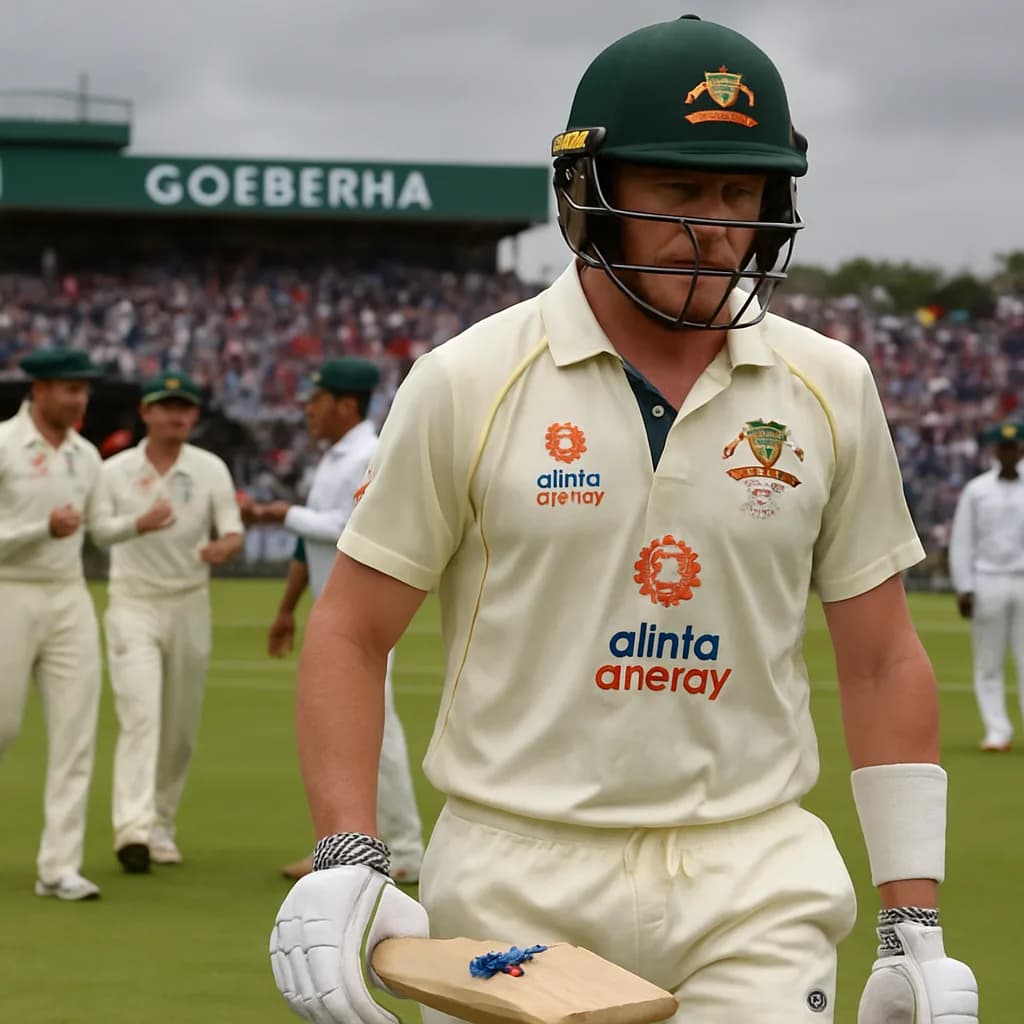
Representative image for illustration
Marnus Labuschagne’s recurring way of getting out is drawing open criticism from former players and piling pressure on Australia’s selectors. Former internationals say Pat Cummins would be quietly furious about Labuschagne’s dismissal pattern because it undercuts the top-order stability the team needs. According to reporting after the South Africa second Test, former opener Simon Katich publicly unloaded on Labuschagne and selection choices, calling the habit costly to the side’s cause [https://www.nine.com.au/sport/cricket/news-australia-v-south-africa-second-test-marnus-labuschagne-dismissal-reaction-selection-20261022-p617pa.html]. Selectors face a choice between loyalty to a proven run-scorer and the immediate need to stop avoidable losses.
What former players actually said about Labuschagne’s dismissal pattern
Simon Katich was direct in his assessment of Marnus’ dismissal in the Gqeberha Test, saying the series of outs exposed selection errors and a lack of clarity at the top of the order. Katich’s comments came amid heavy criticism after South Africa’s dominant win in the match [https://www.nine.com.au/sport/cricket/news-australia-v-south-africa-second-test-marnus-labuschagne-dismissal-reaction-selection-20261022-p617pa.html]. Matthew Hayden also criticised selectors earlier in the summer for resurrecting certain players’ careers, using strong language about disrespect to first-class cricket when selection choices looked confusing to observers [https://www.nine.com.au/sport/cricket/news-nic-maddinson-australia-squad-south-africa-matthew-hayden-george-bailey-criticism-20261006-p6133d.html]. Usman Khawaja proposed a tactical change, moving Matt Renshaw to open to solidify the start of innings, arguing that such a shift could reduce pressure on the middle order where Labuschagne bats [https://www.nine.com.au/sport/cricket/news-australia-south-africa-test-team-cape-town-usman-khawaja-matt-renshaw-marnus-labuschagne-xi-20261023-p617y0.html]. Katich, Hayden and Khawaja are former internationals whose comments were recorded in post‑match and selection debates.
Why selectors and senior players are worried: the numbers and schedule
Selectors worry because Labuschagne’s dismissals come at times that swing matches away from Australia. South Africa’s win in the Gqeberha Test evened the series at one win each, a fact that sharpens selection scrutiny for the remainder of the tour [https://www.nine.com.au/sport/cricket/south-africa-australia-second-test-gqeberha-result-highlights-20261023-p617y2.html]. The Australian panel must weigh short-term form against longer-term batting depth at a time when the Test schedule is unforgiving; Cricket Australia announced a packed 2026-27 calendar that forces ageing players into four matches in a 31-day span, increasing the cost of brittle batting displays [https://www.nine.com.au/sport/cricket/australia-test-schedule-2026-2027-gabba-snub-new-zealand-tour-bangladesh-reaction-news-20260323-p5rmk7.html]. Availability problems compound selection headaches: Megan Schutt’s two-match ban for a prescription drugs blunder is a reminder that off-field issues can also force abrupt lineup changes during critical windows [https://www.nine.com.au/sport/cricket/australia-megan-schutt-suspension-ban-prescription-drugs-medication-statement-20261022-p617w4.html]. Those three numbers, 1-1 series status, four matches in 31 days, and a two-match suspension, provide concrete constraints on selectors.
Selectors must choose whether to back Labuschagne's run-scoring or act to remove a perceived weak link.
A concrete match example: Gqeberha and the cost of the dismissal
In the South Africa Test at Gqeberha, Australia collapsed at key moments and South Africa dominated across the rain-interrupted match, producing a result that levelled the series [https://www.nine.com.au/sport/cricket/south-africa-australia-second-test-gqeberha-result-highlights-20261023-p617y2.html]. The match saw batting failures compounded across sessions; another recent fixture earlier in the season recorded 19 wickets to fall on a single day after a top-order error triggered a collapse, showing how one pattern can cascade into a dramatic result [https://www.nine.com.au/sport/cricket/the-ashes-2025-usman-khawaja-fails-to-open-first-test-jake-weatherald-wicket-20251121-p5nhiu.html]. That example underlines the mechanism critics are warning about: a dismissal pattern that recurs at the wrong time costs partnerships, invites attacking fields and increases pressure on bowlers to defend below-par totals.
How does that translate to the scoreboard? When a key middle-order batter departs cheaply in the 30–40 run range, partnerships shrink and the margin for error disappears. In Gqeberha critics argued this sequence directly aided a dominant South African win [https://www.nine.com.au/sport/cricket/south-africa-australia-second-test-gqeberha-result-highlights-20261023-p617y2.html].
Trade-offs for selectors and concrete steps they could take next
Selectors face three main options: back Labuschagne and reshuffle around him, replace him with a different middle-order batter, or alter the top order to reduce exposure. Each has costs. Backing Labuschagne keeps continuity and rewards form accumulation, but it risks repeating match-losing dismissals. Dropping him can destabilise morale and invite public criticism from former players, as Matthew Hayden and others have already shown [https://www.nine.com.au/sport/cricket/news-nic-maddinson-australia-squad-south-africa-matthew-hayden-george-bailey-criticism-20261006-p6133d.html]. Reconfiguring the top order, as Usman Khawaja suggested by moving Matt Renshaw to open, tries to address the structural cause rather than the symptom [https://www.nine.com.au/sport/cricket/news-australia-south-africa-test-team-cape-town-usman-khawaja-matt-renshaw-marnus-labuschagne-xi-20261023-p617y0.html].
Practical steps: conduct a short, focused batting review after the next match; trial Renshaw as an opener in Australia’s domestic fixtures or the next warm-up; and ask senior players to work on one specific dismissal type in nets with targeted scenarios. The selectors could also set a clear performance threshold (for example, a run of low scores across two Tests) that triggers selection change, thereby replacing ad-hoc decisions with a transparent rule. Those steps balance fairness and urgency.
What this means for the Test XI and immediate action to watch for
Expect the selection conversation to centre on top-order balance. If Australia wants fewer volatile moments, they may move players around rather than make an immediate, headline-grabbing omission. That mirrors Khawaja’s call to reshuffle the top order instead of a straight replacement at No. 4 [https://www.nine.com.au/sport/cricket/news-australia-south-africa-test-team-cape-town-usman-khawaja-matt-renshaw-marnus-labuschagne-xi-20261023-p617y0.html]. A short-term fix would be to create scenarios in practice that force Labuschagne to face the deliveries that have gotten him out and to give him more time at the crease in tour matches.
Watch for these signals in the next selection bulletin: explicit mention of batting balance, trial positions in warm-up matches, or a named preference for right-left combinations at the top. If selectors move quickly, the team could mitigate the problem before the scheduled flurry of matches puts extra strain on a fragile batting line-up [https://www.nine.com.au/sport/cricket/australia-test-schedule-2026-2027-gabba-snub-new-zealand-tour-bangladesh-reaction-news-20260323-p5rmk7.html].
Key things to monitor now:
- Whether Renshaw gets a top-order trial in domestic or tour matches [https://www.nine.com.au/sport/cricket/news-australia-south-africa-test-team-cape-town-usman-khawaja-matt-renshaw-marnus-labuschagne-xi-20261023-p617y0.html]
- Any public selector framework about thresholds for dropping or resting established players [https://www.nine.com.au/sport/cricket/news-australia-v-south-africa-second-test-marnus-labuschagne-dismissal-reaction-selection-20261022-p617pa.html]
- Captain Pat Cummins’ private stance, which former players suggest would be strict though unspoken [https://www.nine.com.au/sport/cricket/news-australia-v-south-africa-second-test-marnus-labuschagne-dismissal-reaction-selection-20261022-p617pa.html]
Takeaway: what followers and selectors can do right now
If you follow the series, watch the next squad announcements and warm-up XI for top-order changes and look for hard evidence rather than rhetoric. For selectors, act on the dismissal pattern with a targeted, time-limited plan: 1) set a transparent form threshold, 2) trial Renshaw or another opener in tour matches, and 3) allocate practice time to the exact deliveries causing the dismissals. Those steps balance patience with the urgency the schedule demands and give Cummins the best chance to be quietly satisfied with how the team responds rather than, as critics warn, privately seething.
Comments (0)
No comments yet. Be the first to share your thoughts!