Ayush Mhatre undergoes hamstring operation; sidelined for 3 months
This article was drafted with Citeya, an AI writing tool, from published reports and is published under Kishan Prajapat's name. See our editorial standards or report an error.
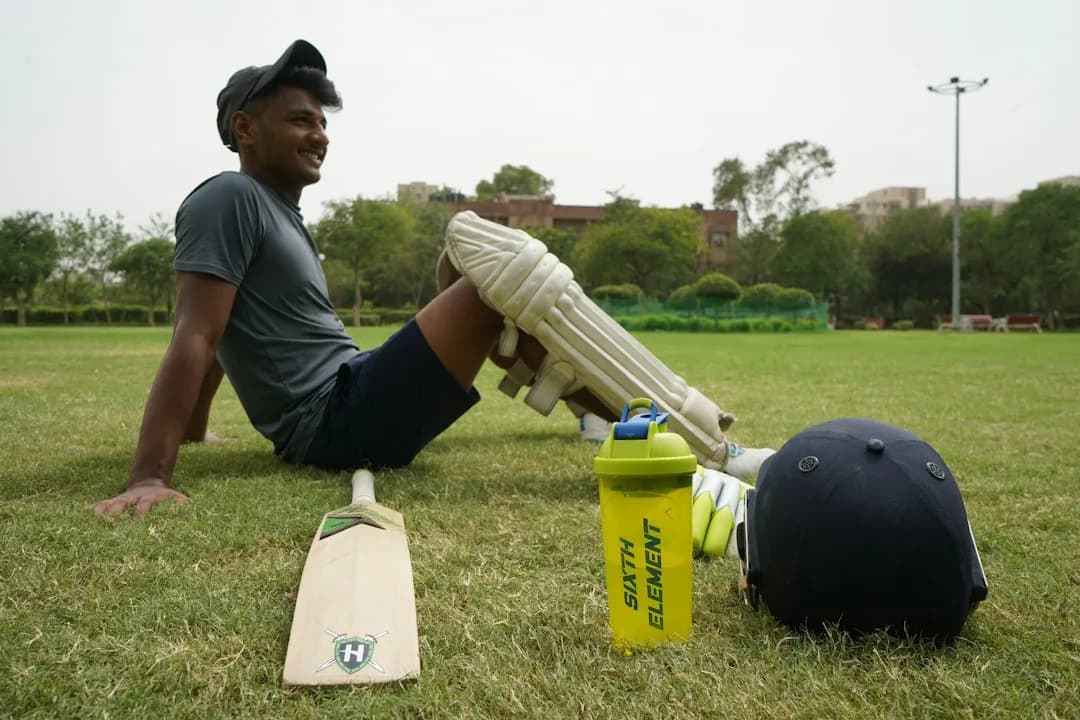
Representative image for illustration
Ayush Mhatre has undergone surgery for a severe right hamstring injury and is expected to be out of action for about three months, with some reports placing the layoff closer to four months. Surgery is confirmed, the injury is described as a Grade 4 tear by multiple outlets, and medical teams expect a multi-month rehabilitation before he returns to competitive cricket.
According to a Rediff report, the India Under-19 World Cup winning skipper and Mumbai vice-captain underwent successful surgery for a Grade 4 right hamstring tear on October 23, 2026, and faces an extended absence from playing while he recovers [https://www.rediff.com/cricket/report/ayush-mhatre-undergoes-surgery-out-for-3-months/20261023.htm]. ThePrint carried a PTI dispatch that put the expected recovery period at about three months after surgery [https://theprint.in/sport/ayush-mhatre-undergoes-surgery-for-hamstring-injury-sidelined-for-about-three-months/3079296/]. A third report cited a recovery window of four months, which underlines the uncertainty in prognosis for high-grade hamstring injuries [https://www.sportstiger.com/cricket/ayush-mhatre-undergoes-grade-4-hamstring-tear-surgery-to-remain-out-of-action-for-four-months-reports/].
The injury and operation: what the reports say
Reports identify the injury as a Grade 4 tear of the right hamstring, a classification that signals a severe muscle disruption and typically requires surgical repair rather than conservative care. Rediff explicitly calls it a Grade 4 hamstring and says Mhatre underwent surgery successfully on October 23, 2026 [https://www.rediff.com/cricket/report/ayush-mhatre-undergoes-surgery-out-for-3-months/20261023.htm]. ThePrint repeats the surgical outcome and frames the absence at around three months as the team's working estimate after surgery [https://theprint.in/sport/ayush-mhatre-undergoes-surgery-for-hamstring-injury-sidelined-for-about-three-months/3079296/]. SportsTiger describes the same injury but reports a four-month absence in some accounts, which illustrates how early prognoses can vary between treating clinicians and media outlets [https://www.sportstiger.com/cricket/ayush-mhatre-undergoes-grade-4-hamstring-tear-surgery-to-remain-out-of-action-for-four-months-reports/].
A Grade 4 label usually indicates a near-complete or complete rupture, often at the musculotendinous junction. That more often triggers surgical intervention and a staged rehab plan with progressive loading, physiotherapy and return-to-sprint testing before full competition is allowed. The exact surgical technique and graft or repair details were not published in the reports, so the prognosis offered by Mumbai team sources and PTI is the most specific timeline available publicly [https://theprint.in/sport/ayush-mhatre-undergoes-surgery-for-hamstring-injury-sidelined-for-about-three-months/3079296/].
Why timelines differ: three months versus four months
Early reports give either three months or four months as the expected downtime. ThePrint quotes PTI saying Mhatre will be out for about three months after surgery [https://theprint.in/sport/ayush-mhatre-undergoes-surgery-for-hamstring-injury-sidelined-for-about-three-months/3079296/]. Rediff uses similar language but also stresses the Grade 4 diagnosis, which other medical sources link to longer rehabilitation in many athletes [https://www.rediff.com/cricket/report/ayush-mhatre-undergoes-surgery-out-for-3-months/20261023.htm]. SportsTiger reports some outlets placing the return at four months, a discrepancy that can stem from conservative versus optimistic clinical perspectives and differences in whether the timeline refers to return to training or return to competitive matches [https://www.sportstiger.com/cricket/ayush-mhatre-undergoes-grade-4-hamstring-tear-surgery-to-remain-out-of-action-for-four-months-reports/].
Three months may be a target for resuming controlled training. Four months or longer can be a safer estimate for match fitness in cricket, where repeated sprinting and sudden deceleration stress the hamstring. Fans and selectors should expect updates from Mumbai's medical staff as rehabilitation milestones are met and imaging or strength tests guide decisions.
Team fallout: selection, Mumbai's balance and India youth pathways
Mhatre is listed in reports as Mumbai vice-captain and the India Under-19 World Cup winning skipper, a standing that makes his absence more than an injury story; it affects leadership and squad balance [https://www.rediff.com/cricket/report/ayush-mhatre-undergoes-surgery-out-for-3-months/20261023.htm]. Mumbai's domestic and junior squads will have to reassign batting positions and possibly captaincy duties for the near term. If the three-month window holds, Mhatre could miss key parts of the domestic season; if four months is more accurate, his absence would extend into later fixtures [https://theprint.in/sport/ayush-mhatre-undergoes-surgery-for-hamstring-injury-sidelined-for-about-three-months/3079296/].
Teams will make different trade-offs. Mumbai might prefer an experienced short-term replacement to preserve results in the Ranji Trophy or Vijay Hazare fixtures. Alternatively, the club could accelerate development opportunities for younger batsmen. For selectors responsible for India A or youth tours, Mhatre's unavailability forces contingency planning for talent pipelines that rely on his leadership and recent U-19 success to project future national prospects [https://www.rediff.com/cricket/report/ayush-mhatre-undergoes-surgery-out-for-3-months/20261023.htm].
Short list of immediate actions teams typically take after such an injury:
- Confirm the medical timeline and milestones with the club's surgeon and physiotherapist.
- Adjust playing roles and temporary captaincy for upcoming fixtures.
- Monitor rehab progress with objective tests (strength, sprint threshold, imaging).
Rehabilitation: staged steps to a safe return
Rehab after surgical repair of a high-grade hamstring usually follows progressive phases: protect and control inflammation, restore range of motion, rebuild strength and power, then sport-specific conditioning and testing. The reports do not provide a detailed rehab protocol; the three- to four-month timelines imply an accelerated, structured program overseen by surgical and physiotherapy staff [https://theprint.in/sport/ayush-mhatre-undergoes-surgery-for-hamstring-injury-sidelined-for-about-three-months/3079296/].
A realistic pathway during months one to three typically looks like this: initial immobilization and pain control with gradual passive motion in weeks one to three, controlled loading and isometric strengthening in weeks three to six, sprint mechanics and eccentric strengthening in months two to three, then single-leg power and batting-specific drills before light net sessions. Objective tests such as isokinetic strength comparison with the uninjured limb and sprint times guide progression. If Mhatre meets those objective milestones by week 10 to 12, a return to limited match play could be considered, consistent with the shorter timeline reported by PTI [https://theprint.in/sport/ayush-mhatre-undergoes-surgery-for-hamstring-injury-sidelined-for-about-three-months/3079296/].
Risks, trade-offs and monitoring once he returns
Returning too soon risks reinjury, and reinjury rates after hamstring repair are non-trivial in athletes who resume high-speed running without full eccentric strength recovery. The media discrepancy between three and four months reflects a real clinical trade-off: return earlier to help the team now, or delay to reduce long-term risk [https://www.sportstiger.com/cricket/ayush-mhatre-undergoes-grade-4-hamstring-tear-surgery-to-remain-out-of-action-for-four-months-reports/].
Selectors and coaches should insist on clear, measurable criteria before allowing match exposure: limb strength within 90 to 95 percent of the uninjured side, pain-free sprinting, and successful completion of sport-specific drills in nets under load. Imaging or functional tests should document healing progress if available. Publicly, Mumbai and national selectors have not released those metrics; press outlets are relying on the surgical timeline reported by team sources and PTI [https://theprint.in/sport/ayush-mhatre-undergoes-surgery-for-hamstring-injury-sidelined-for-about-three-months/3079296/].
One question fans will ask is whether this injury affects Mhatre's place in future India age-group sides. That depends largely on his rehab outcome and the performances of temporary replacements. The immediate safeguard is medical clearance based on objective testing, not calendar days alone.
Takeaway: what followers and stakeholders should do next
Follow official updates from Mumbai Cricket and the player’s medical team rather than fixed calendar estimates, because early reports differ between three and four months [https://theprint.in/sport/ayush-mhatre-undergoes-surgery-for-hamstring-injury-sidelined-for-about-three-months/3079296/; https://www.sportstiger.com/cricket/ayush-mhatre-undergoes-grade-4-hamstring-tear-surgery-to-remain-out-of-action-for-four-months-reports/]. If you follow selection or fantasy decisions, assume Mhatre will miss immediate fixtures and watch for objective return-to-play markers such as strength symmetry and sprint testing before expecting him back. For coaches and physiotherapists, the practical step is to track staged rehab milestones and communicate them publicly so selection committees can plan. Mhatre’s recovery will be a test of medical prudence and his capacity to rebuild power after a Grade 4 hamstring repair [https://www.rediff.com/cricket/report/ayush-mhatre-undergoes-surgery-out-for-3-months/20261023.htm].
1) A clinical photo-style image of a cricketer on a treatment table having a hamstring ultrasound scan, hospital setting, doctor and physiotherapist consulting, neutral color palette.
2) Action shot: mid-sprint cricketer during training with focus on the back of the thigh musculature, stadium background blurred, warm early-morning light.
Comments (0)
No comments yet. Be the first to share your thoughts!