Australia’s Four Cricket Greats: Their Unmatched Legacy and What Lies Ahead
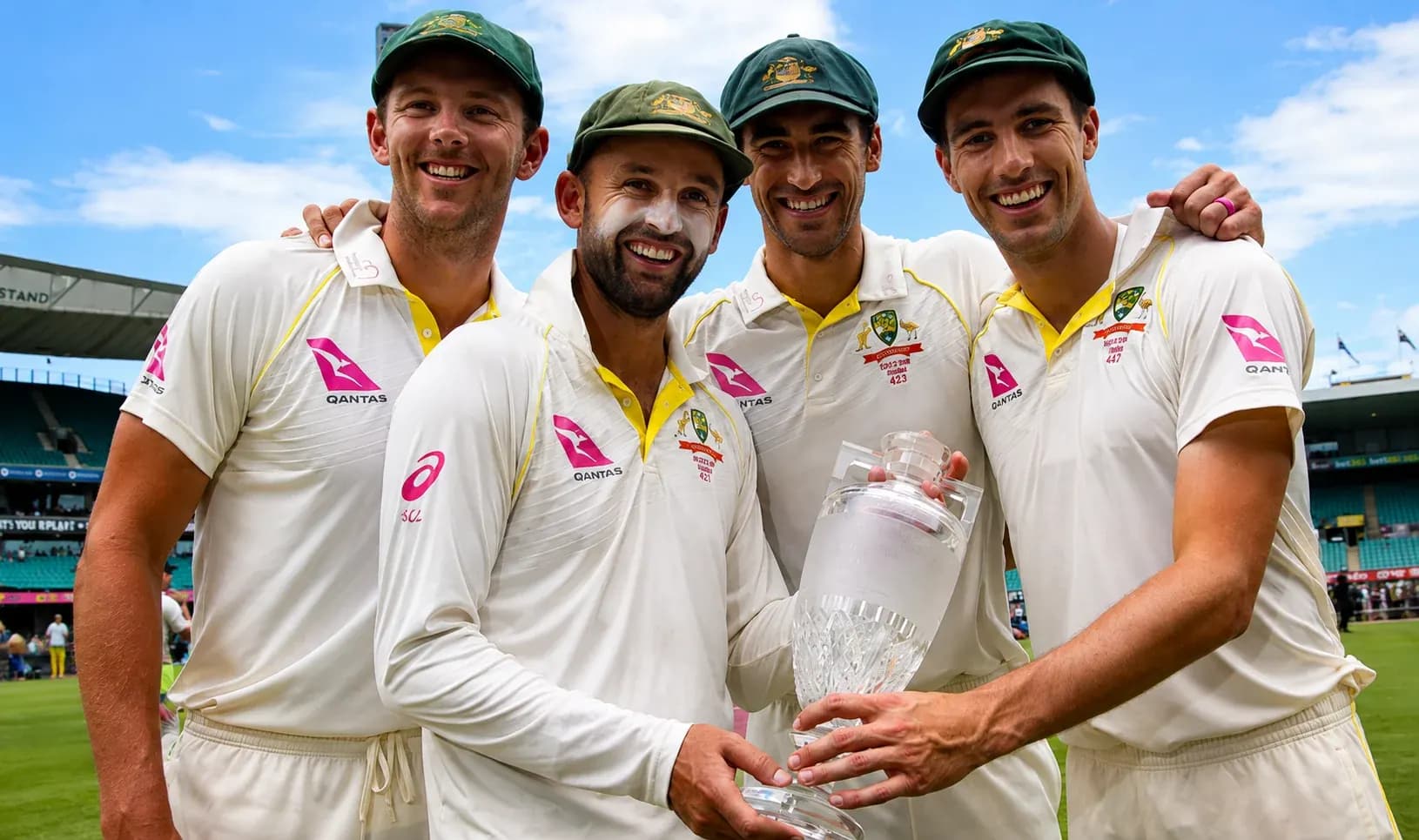
Representative image for illustration
Great fast bowlers, fearless competitors and teams capable of dominating Test cricket for years have always been associated with Australian cricket. That tradition has been carried in the modern era by four exceptional bowlers: Pat Cummins, Mitchell Starc, Josh Hazlewood and Nathan Lyon.
Together they have formed one of the best bowling combinations of the modern age. Cummins has speed, leadership and an unrelenting eye for accuracy. Starc offers left-arm pace and swing. Hazlewood bowls with a fantastic amount of control and discipline. Lyon has matured into Australia’s leading off-spinner and one of the most successful Test spinners of all time. They have been in each other s careers for years, overlapping to form a bowling unit that can adapt to almost any condition. The sum of the parts is evident not only in the number of wickets but in the continued success of Australia in Test cricket.
But the story is moving into a different phase. All four are veterans now. Cummins, Starc, Hazlewood and Lyon are still vital parts in Australia s Test plans, but the next generation is waiting in the wings. Australia is already starting to think about succession and how to manage workloads and keep its bowling attack strong.
The Four Pillars of Australia’s Current Bowling Attack
What makes the quartet great is that they are all so different. Pat Cummins is leading the pack and is one of the most complete fast bowlers in the world. He bowls long spells, retains his pace and gets movement off the surface and that makes him dangerous in almost all conditions. His career has gained another dimension thru his leadership. Mitchell Starc does a totally different thing. His extreme pace, late swing, ability to produce devastating yorkers and left-arm angle have made him one of the most dangerous limited-overs and Test bowlers of his generation. Metronome: Josh Hazlewood. He can continue to find the right length, apply pressure without creating extravagant movement. He is the bowler Australia regularly calls upon for control.
Finishes the combination, Nathan Lyon. He is a specialist off-spinner and therefore presents a very different threat to Australia, and has been particularly important in long Test matches when support has been needed for the pace bowlers.
That’s part of the reason the four have been so hard to deal with.
The spearhead of the attack: Pat Cummins
Cummins has developed well past his image as a fast bowler. He was an exciting young quick but suffered major injury interruptions early in his career. Once he established himself as a regular Test bowler, his consistency transformed Australia’s attack. His appointment to the captaincy was one more feather in an already impressive cap. Cummins has been at the top of Australia’s major Test campaigns and remains core to the team’s planning. He returned from injury to be named in Australia s 2026 squad for the Tests against Bangladesh, beginning in Darwin on August 13. His importance is apparent. Australia are not only managing a senior fast bowler, they are managing the captain and one of the pillars of their Test side.
Mitchell Starc: Australia’s left-arm weapon
Starc is one of the defining pace bowlers of his generation. Starc is one of the few bowlers who has the height, left-arm pace, swing and yorker execution that he has. He can hit the stumps with the new ball and is especially dangerous early in an innings. He has also produced some brilliant performances in the big tournaments and has shown that his impact is not limited to the traditional Test cricket. One of Starc’s greatest assets has been his ability to quickly change the momentum of a game. A brief period can lead to a handful of wickets, especially with the ball moving.
His experience is also coming in handy as Australia prepares for a demanding period of Test cricket.
Also Read: 2027 ODI World Cup Format: ICC Introduces Super 7 Stage as Tournament Expands to 14 Teams
Josh Hazlewood: The Control Master
Hazlewood’s numbers are only part of the picture. His consistency is his greatest asset. The Australian paceman doesn’t have to look far for extravagant deliveries. Instead, he keeps putting the ball in places that make batters think. That discipline makes him particularly dangerous in Test cricket. Hazlewood has also suffered injury problems in the latter stages of his career. His fitness has been a big issue during Australia’s last home summer but he was back in the Test squad for the Bangladesh series.
Selectors face the challenge of managing his workload without compromising his effectiveness.
Nathan Lyon: Australia s Great Spinner
Even more curiously this quartet features Nathan Lyon. While fast-bowling groups often take the spotlight in terms of Australia’s cricketing identity, Lyon has been just as important to the team’s Test success. His off-spin has taken wickets in different conditions and his ability to bowl long spells means Australia’s pace attack can rest while maintaining pressure from the other end. Lyon has also learned to be patient and thrive on pitches that don’t provide immediate assistance.
Another key development is his inclusion back in the Australian squad for the Bangladesh Tests. He missed part of the previous Ashes campaign because of a hamstring problem but is back in the frame.
Why They Worked So Well Together
The quartet clicked because their skills complemented each other.
Cummins might have a go with pace and bounce.
Starc was able to reverse the new ball and then swing it.
Hazlewood was able to build pressure with accuracy.
Lyon could bowl long middle overs to the batters.
This meant the Australian captain always had an array of options for producing dismissals.
If the pace suited pace the quicks could take over.
If the surface slowed, Lyon could take over.
That tactical flexibility made it particularly difficult to negate the bowling attack.
What Comes Next: The Trouble with
And this is where the story gets interesting for Australia in cricket.
All four bowlers are approaching the end of their careers and Australia has a hectic schedule ahead. Reports suggest the team is likely to feature in around 20-21 Tests in the next 12 months, including big assignments against Bangladesh, India and England.
That’s a tough juggling act.
Australia needs these experienced players at their best but also needs to develop replacements before retirements come. Boland has already shown that he can perform at Test level. Younger quicks like Lance Morris and other contracted players are also part of Australia’s broader succession planning. The spin department. Now, that’s another story. Lyon’s eventual successor is not immediately clear, tho Todd Murphy, Matt Kuhnemann and Corey Rocchiccioli are among developing options.
Can Australia Hold the Quartet Together?
All four are in the squad for the Bangladesh series, but that doesn’t mean they’ll play all the matches together. “Conditions, fitness and workload will dictate the final XI,” selectors have already confessed. The quartet, it is said, had little chance to bowl together in the last Ashes campaign due to injuries. Their return gives Australia the opportunity to bring back together an attack that has defined its Test cricket for much of the last decade. Every opportunity to see them together is that much more precious.
Expert Analysis CricLegacy
The legacy of Cummins, Starc, Hazlewood and Lyon shouldn’t be defined by the number of wickets they’ve taken. What they have contributed is continuity. For years Australia could walk into a Test with four different sorts of bowlers available. This eased the pressure on any one player and gave captains huge tactical flexibility. But the big challenge for Australia now is to avoid a sudden fall when this generation passes on. The selectors should resist the temptation to change all four. A better way is a slow transition. Young fast bowlers need to be given opportunities to bowl alongside experienced players. Emerging spinners need to be exposed to testing Test conditions Senior bowlers, too, need to be rested in a planned manner instead of being expected to play all the matches on offer.
What is in store for Australia s Big Four?
The near future still matters. Cummins, Starc, Hazlewood and Lyon are all part of Australia’s 2026-27 Test plans, with the Bangladesh series an early test of their fitness and combination. Away from Bangladesh and the schedule gets even more hectic for Australia. With the team likely to play a lot of Tests against India and England, managing workload becomes more important. “Those matches can be some of the biggest chapters of their careers for the four veterans. They are also a reminder for Australian cricket that every great generation reaches a point of transition.
Time line
2011–2012: Cummins, Starc, Hazlewood and Lyon emerge at international level.
2015-17: The four become increasingly important parts of Australia s Test setup.
2017 onward The quartet becomes Australia s premier modern bowling outfit.
2025: Injuries restrict their chances to work together over parts of the Ashes cycle.
July 2026: Cummins, Hazlewood and Lyon included in Australia’s Test squad for Bangladesh series, Starc also included
Australia begin another tough Test cycle from August 2026 with the veteran quartet still central to their plans.
Frequently asked question
Q1. Who are Australia’s four great modern cricketers?
Pat Cummins, Mitchell Starc, Josh Hazlewood and Nathan Lyon are the modern day Test bowling quartet for Australia.
Q2. Why are Lyon, Starc, Hazlewood and Cummins so crucial?
The various skills they bring gives Australia the full package of pace, swing, accuracy, bounce and top class spin.
Q3. Have the four played much together?
They have been involved in many big Test campaigns together, tho injuries and workload management have meant less and less time where all four have been available to play.
Q4. Is Nathan Lyon Australia’s greatest modern-day spinner?
There’s no doubt Lyon is one of Australia’s most successful Test spinners and he’s become an integral part of Australia’s long-term Test history.
Q5. What is Mitchell Starc s difference?
Australia has in Starc a rare left-arm combination of extreme pace, swing and yorker accuracy.
Q6. Why is Josh Hazlewood so hard to play?
He can repeatedly achieve a perfect length and his remarkable control means he can build pressure without going to extreme pace.
Q7. What makes Pat Cummins so special?
Cummins has the speed, accuracy, durability, tactical nous and leadership qualities to be a valuable bowler and captain.
Conclusions
Australia s four modern bowling greats have built a legacy that will be hard to emulate. Pat Cummins, Mitchell Starc, Josh Hazlewood and Nathan Lyon had different skills within the same attack, a combination that could win games in almost any condition. This group is central to their Test plans and Australia have big challenges ahead with their careers not over. But the conversation about their legacy has already begun, because the next phase of Australian cricket is on its way. The real test now is not just how many more wickets these four can take. The question is whether Australia can spend their remaining years nurturing the bowlers who will eventually replace them.
Comments (0)
No comments yet. Be the first to share your thoughts!