Why are India, Zimbabwe players wearing black armbands during 1st Women’s T20I?
This article was drafted with Citeya, an AI writing tool, from published reports and is published under Kishan Prajapat's name. See our editorial standards or report an error.
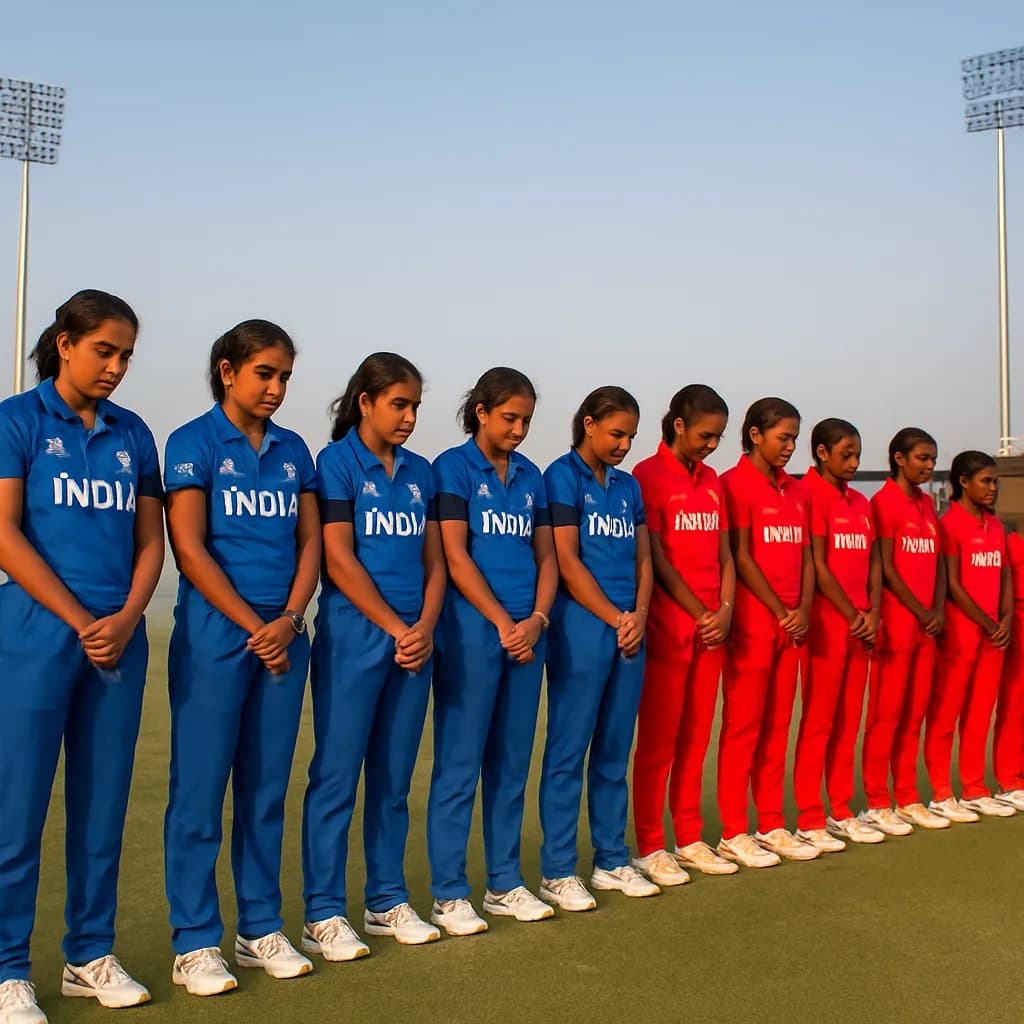
Representative image for illustration
Both teams wore black armbands and observed a moment of silence to honour former Zimbabwe cricketer and umpire Sarah Dambanevana, who recently died. It was a coordinated, on-field act of mourning by India and Zimbabwe ahead of the 1st Women’s T20I in Raipur, not a protest or a tournament sanction (Yahoo Sports, NDTV).
Context matters because teams wear black armbands for different reasons: deaths, anniversaries, or safety incidents. This case was explicitly a memorial for Sarah Dambanevana, described in multiple reports as a former Zimbabwe cricketer and pioneering umpire (The Hindu/Sportstar, News18).
Who was Sarah Dambanevana and why was she honoured
Reports identify Sarah Dambanevana as a former Zimbabwe cricketer who also served as an umpire, and her death prompted tributes from the women’s teams. Multiple outlets covering the Raipur game state the armbands were worn specifically in her memory (Yahoo Sports, The Hindu/Sportstar). Every major report identifies Dambanevana that way, so the gesture has been widely reported as a memorial rather than an in-game protest (Indian Express).
A memorial on the field is an institutional act. National teams and match officials agreed before the game to observe a minute of silence and to wear armbands, showing the honour had official backing from both sides, the teams themselves act as the named organizations in these accounts (NDTV). That procedural detail distinguishes team-led mourning from fan-led or spontaneous gestures.
How the teams marked the occasion on the field
Game-day reports describe the sequence: before play began, both women's teams and match officials observed a minute of silence, then players wore black armbands during the 1st T20I to signify mourning (Yahoo Sports, News18). Observing silence and wearing an armband are standard forms of on-field tribute in cricket and other sports.
A short list shows what happened and who took part:
- Players from both teams wore black armbands.
- Match officials joined the observance.
- A moment of silence was held before the toss and the start of play.
Those three actions make clear this was coordinated and ceremonial rather than ad hoc. The Indian Express and NDTV both report the minute of silence and the armbands while Sportstar/The Hindu frames the act as honouring Dambanevana’s pioneering role in Zimbabwe cricket (Indian Express, NDTV, Sportstar).
What the tribute means for officials, fixtures and etiquette
A team-wide tribute usually requires clearance by the match referee or event organiser. News accounts note match officials participated, which implies the fixture’s administrators approved the observance (NDTV). That keeps the action within tournament protocols and avoids disciplinary issues that could arise from unsanctioned demonstrations.
A caveat: the lines between official tribute and political statement can blur in other matches. Here, multiple outlets explicitly describe the armbands as a memorial for Dambanevana, which corrects speculation that the black bands were for a political cause or protest (News18). The on-field participation of match officials reduces the chance of a rules breach, but fans should remember that different competitions have specific policies about armbands and messages.
Misconceptions, corrections and what the coverage clarifies
A common misconception is that black armbands always signal protest. In this instance, coverage from Indian Express and Yahoo Sports clarifies the bands were a sign of mourning for an individual, not a political or safety protest (Indian Express, Yahoo Sports). Another misconception is that only players wear them; here, match officials also joined the minute of silence, showing the observance had broad, official buy-in (NDTV).
If you saw social media speculation that the armbands were for a recent on-field incident, the reporting corrects that idea: multiple reputable outlets tied the gesture to Dambanevana’s death and noted the minute of silence as part of the pre-match ritual (Sportstar/The Hindu, News18).
A concrete example from the Raipur match and immediate repercussions
At the 1st T20I in Raipur, the match build-up included the minute of silence and the black armbands; afterwards, play continued as scheduled with Smriti Mandhana’s side involved in normal match duties, the toss was won and Mandhana elected to bowl, and Niki Prasad made her T20I debut for India in the series opener, both items recorded in match reporting (The Statesman). Those are concrete match-level data points tied to the same fixture where the tribute occurred.
A trade-off for teams staging tributes is timing: organisers must fit the observance into the match schedule without delaying play. Here the tribute occurred before the start, through silence and armbands, which minimised disruption. Fans watching live will see the visual cue and the formal silence; broadcasters usually note the reason in a caption or commentary, and print coverage followed with explicit attribution to Dambanevana’s memory (Yahoo Sports, NDTV).
Takeaway: what you can do next as a fan or follower
If you want to confirm why a team is wearing black armbands at a match, check match reports from reputable outlets or the organising body’s statements before assuming a political motive. For the Raipur 1st Women’s T20I, mainstream reports are consistent: the gesture honoured Sarah Dambanevana, included a minute of silence, and was observed by players and match officials, all documented by multiple sources (News18, Indian Express, NDTV).
If you follow fixtures closely, bookmark the competition’s official site or the match report pages used by broadcasters. That will give you the authoritative explanation quickly the next time a team wears a visible tribute.
Comments (0)
No comments yet. Be the first to share your thoughts!