Virat Kohli remembers Nana Patekar; fans revisit actor's love for cricketer
This article was drafted with Citeya, an AI writing tool, from published reports and is published under Kishan Prajapat's name. See our editorial standards or report an error.
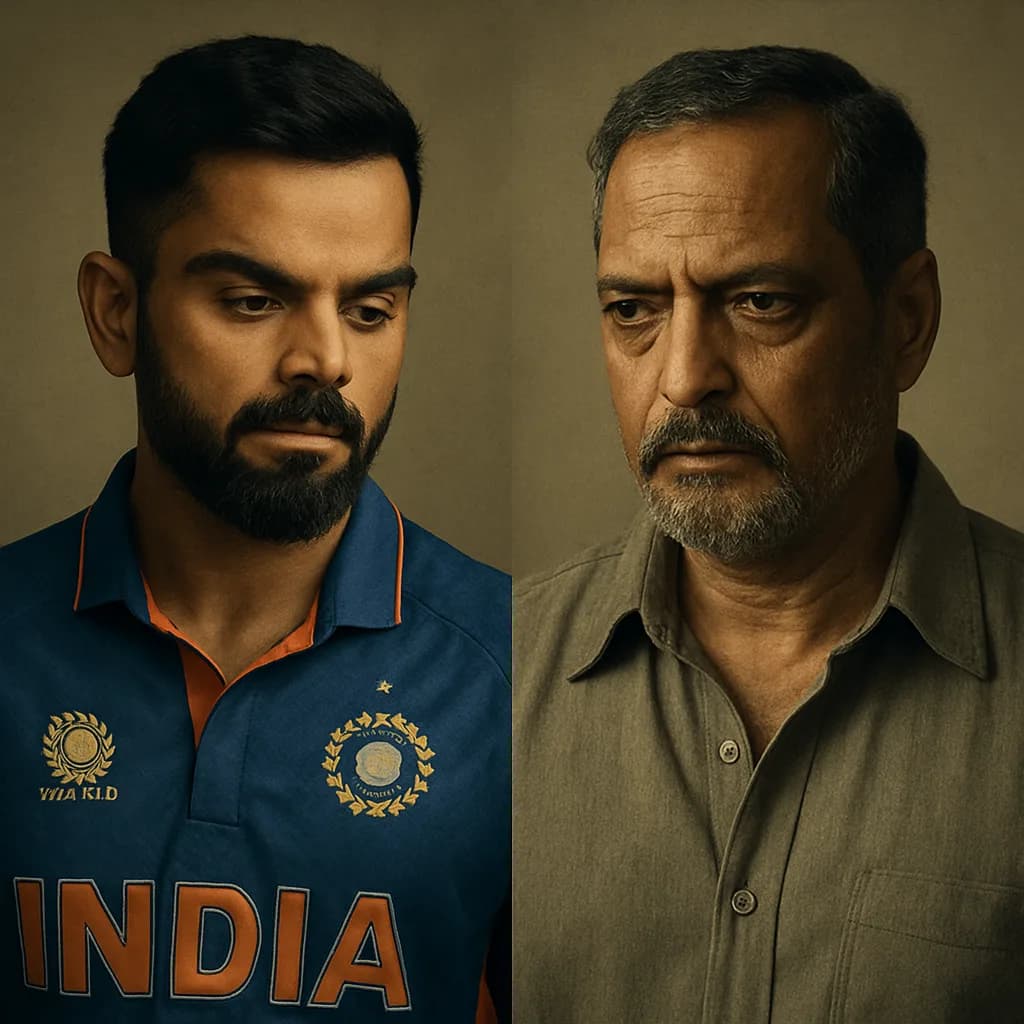
Representative image for illustration
Virat Kohli led public tributes after actor Nana Patekar died in Goa on 8 October 2026, and fans immediately dug up an old clip in which Patekar spoke warmly about Kohli. Kohli called Patekar a "true legend of Indian cinema," and a resurfaced video of Patekar saying he "just don't feel like eating" over his admiration for Kohli quickly reappeared on social timelines, amplifying grief and nostalgia among cricket and film fans. According to news reporting on 8 October 2026, the exchange reignited a conversation about how film stars and sports icons swap roles as cultural symbols in India (India Today, Free Press Journal).
Why Kohli's tribute cut through on 8 October 2026
Kohli's message resonated because of its timing and cultural context, not its length. According to reporting on 8 October 2026, Kohli paid tribute soon after Patekar's death in Goa, and that immediacy made his brief message a focal point for fans and media alike (India Today). The clip that resurfaced contains Patekar referring to Kohli in unusually personal terms for a public figure, which made it shareable at scale.
Cross-industry tributes work differently from routine condolences. Film-actor tributes often trend widely; but when a top sports star responds, it signals a two-way recognition that pulls in both fan bases. A short video or quote becomes a flashpoint, giving journalists a quotable line and social users something emotional to share. That explains why tributes from high-profile athletes frequently become the top stories on the same day a cultural icon dies (India Today).
What Nana Patekar actually said, and why fans dug it up
A viral clip that circulated after Patekar's passing shows the actor telling an interviewer he felt so moved by Kohli that he did not "feel like eating." That direct quote resurfaced on social platforms after Patekar's death, and outlets including the Free Press Journal posted the clip and commentary about its renewed spread (Free Press Journal).
Fans revived the clip for two linked reasons: Kohli's global visibility makes praise from another celebrity an attention shortcut, and the intimate line about not feeling like eating reads as a confessional moment that prompts reshares. The resurfacing also shows a common social-media pattern: emotional clips from earlier interviews often become central to how a public figure is remembered.
There is a trade-off. The clip humanises both men, but it also simplifies a long career into a single memorable line. That reduction makes for shareable content but flattens nuance in an actor's decades-long public life, which is an ethical caveat when fans turn a full life into a meme or a single sentiment (India Today).
How social media amplifies sports-and-film crossovers
The Patekar–Kohli interaction is an example of how digital platforms accelerate cross-sector attention cycles. A single celebrity post can trigger algorithmic boosts; on 8 October 2026 the combination of Kohli's public tribute and a resurfaced clip produced wide circulation within hours (India Today).
The pattern produces both benefits and costs. On the plus side, it creates shared cultural moments that bridge different fan communities. On the minus side, algorithms reward emotion and speed, not accuracy. The same mechanism that quickly revived Patekar's remark could equally resurface misattributed clips. When you see a viral quote tied to a death or tribute, check timestamps and original sources before sharing. One step you can take: find the interview's original upload or the publication that first ran it, and compare it to the viral post's metadata.
A concrete comparison helps: viral tributes often behave like box-office spikes after a trailer drops. Before social platforms dominated distribution, a widely circulated clip would take days to spread; now it's hours. That compression matters because it shortens the window for fact-checking and for families to manage narrative flow (Free Press Journal).
Privacy, grief and the ethics of public memory
Fans' instinct to revisit an actor's fond remarks about a sports star raises ethical questions. When a public figure dies at age 75, as reported for Patekar, outlets and individuals choose which moments to replay; that choice shapes collective memory (Free Press Journal).
There's a trade-off between honoring legacy and commodifying grief. A quick repost can feel supportive, but the same repost monetises sorrow for platforms and sometimes for content owners. Reporters and influencers must balance appetite for clicks with respect for families and context. If you're a fan, ask whether sharing adds value for the bereaved or merely amplifies traffic.
A practical step is to add a source link and avoid sensational captions when sharing a clip tied to someone's death. That practice helps preserve context and reduces the chance of stripping a life down to a single viral line. The broader lesson is that remembering responsibly takes slightly more effort than forwarding a trending post.
How to verify viral clips and what readers can do next
When a clip resurfaces, verify it in three quick steps. First, check the original reporter or outlet and timestamp; reputable outlets publish confirmation quickly, as India Today did when covering Kohli's tribute on 8 October 2026 (India Today). Second, compare the viral post to archived uploads or TV interviews on official channels. Third, look for direct quotes attributed to named people or organizations; named attributions reduce the chance of fabricated lines. The Free Press Journal republished the clip with a clear quote in its coverage of the renewed footage (Free Press Journal).
A brief comparison helps you decide quickly: verified news report versus an unverified social clip. Verified reports will name the date, the outlet, and often include a short quote; unverified posts rarely do. For readers who want to preserve context, download the original video from the hosting account and save the link rather than resharing reposts that scrub metadata.
Practical takeaway: before you share a sentimental clip tied to someone's death, spend 60 seconds verifying the source and adding the original link. That small step preserves context, credits journalists, and reduces the spread of decontextualised snippets.
Closing takeaway
The moment when Virat Kohli remembers Nana Patekar shows how a few words can link cricket and cinema in India's public imagination. Kohli's quick tribute on 8 October 2026 and the resurfaced clip of Patekar saying he "just don't feel like eating" turned into a shared cultural moment because of timing, emotion, and digital amplification (India Today, Free Press Journal). If you want to participate, verify before you share, add the original source, and consider whether your post honors context rather than merely chasing clicks.
Comments (0)
No comments yet. Be the first to share your thoughts!