Supreme Court orders Rajasthan Cricket Association not to declare results after elections
This article was drafted with Citeya, an AI writing tool, from published reports and is published under Kishan Prajapat's name. See our editorial standards or report an error.
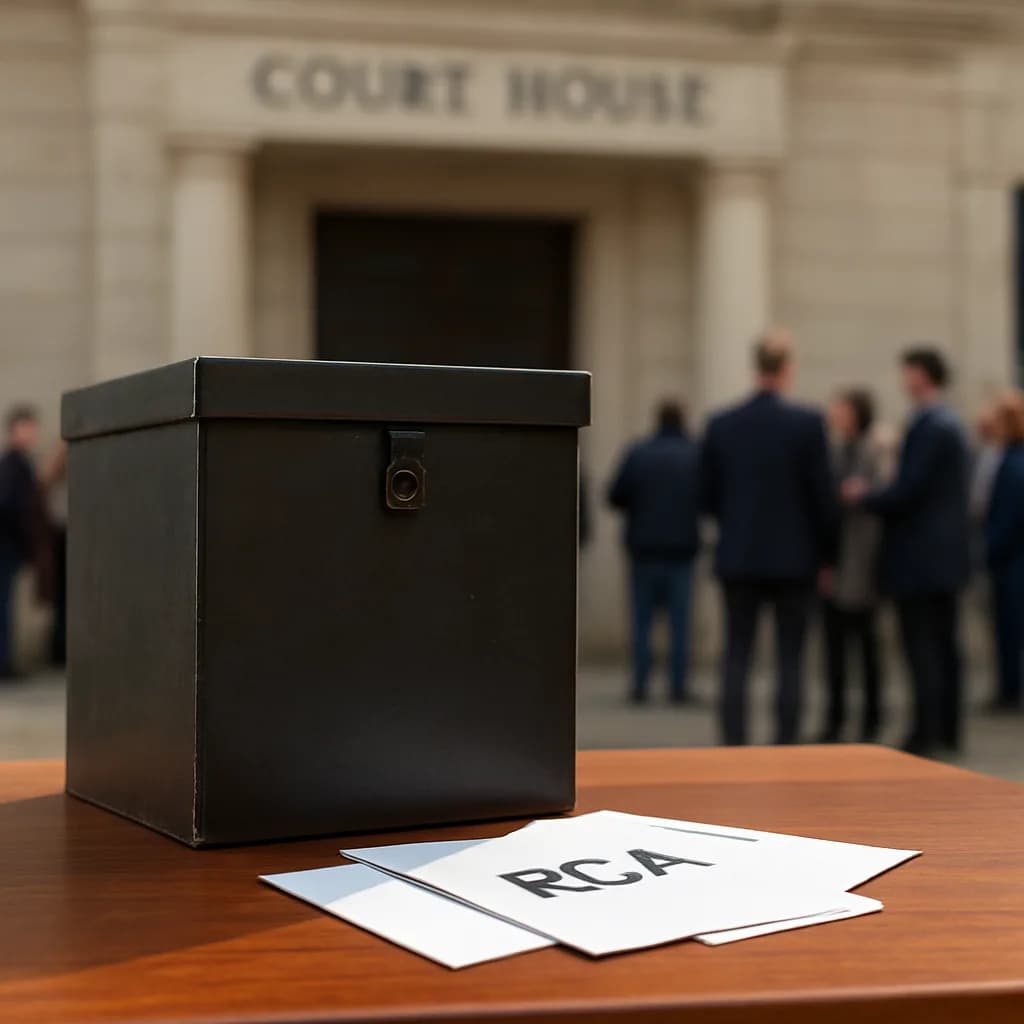
Representative image for illustration
The Supreme Court allowed the Rajasthan Cricket Association (RCA) elections to go ahead but ordered that the poll result must not be declared and should be kept in a sealed cover while a legal challenge about women being excluded is decided. Voting proceeded but the results were sealed, and the court refused to halt polling itself, leaving the RCA's immediate leadership in limbo pending judicial review.
The court intervened after a petition argued that women had been denied the right to stand in the RCA election; the bench refused to halt polling but ordered the outcome kept undisclosed in a sealed cover, according to Hindustan Times and LiveLaw. The case frames a narrow procedural remedy that keeps the electoral mechanics intact while preserving the judiciary's ability to review rights claims.
Why the Supreme Court intervened: legal and procedural context
The petition focused on the exclusion of women from contesting RCA posts. The Supreme Court intervened to protect the question of legal rights before a result could change the status quo, a remedy the court has used in other sports-administration disputes where eligibility or procedural fairness is contested, as reported by Deccan Herald. The court did not strike down the electoral process itself; it allowed physical voting to occur at the scheduled time while preventing any announcement of the winner until the petition is decided, according to IndiaLegalLive.
The ruling balances two common aims in sports governance disputes: avoiding disruption to scheduled events and protecting rights that a post-facto result could negate. The bench chose a middle path, preserving the election's immediate logistics while retaining judicial oversight of eligibility questions.
What the court specifically ordered
The court declined to stay the election itself, which was scheduled to begin at 11:30 a.m., but directed that the declaration of results be put in a sealed cover and not released to the public, as reported by LiveLaw. The order prevents anyone from assuming office based on that election result until the court lifts the seal or disposes of the substantive petition. Multiple outlets reported this same two-part ruling: polling permitted; results sealed, including Hindustan Times and Deccan Herald.
Immediate consequences for RCA, the IPL connection and administration
With results sealed, the RCA remains under administrative uncertainty. That status matters because a clear, court-recognized board is typically required to make binding decisions on hosting rights, staff appointments, and contracts. The suspension of an ad hoc committee by the Rajasthan High Court earlier this year has already affected how the RCA interacts with the Board of Control for Cricket in India (BCCI) over IPL venue approvals, as outlined in reporting about related High Court orders and their practical effect on venue compliance for the Rajasthan Royals' home games Yahoo Sports and analysis in India Today.
A concrete example: how a sealed result could play out
Imagine the RCA held elections on 29 September as scheduled in earlier notices; administration notices show elections were being set in motion and an administrator named Sawant issued the formal notice, establishing a timeline for polling activity and candidate lists Times of India. Votes are cast at 11:30 a.m., counted, and a winning list is prepared. Under the Supreme Court order, that winning list would be sealed. If the court later rules the exclusion of women was unlawful and voids the election, the sealed result helps the court prevent changes in officeholders that would otherwise be irreversible. If the court upholds the election, it can lift the seal and allow the result to be implemented. The seal functions as a legal pause between the act of voting and the recognition of winners.
Trade-offs and risks for stakeholders
The approach creates trade-offs. It prevents a potentially tainted result from becoming entrenched, which protects claimants who argue their rights were denied. That benefit comes at the cost of short-term administrative paralysis. Cricket staff, venue managers and contractors face uncertainty about who can sign legal documents or confirm fixtures while leadership is unresolved. The BCCI typically expects clear state association governance for IPL-related decisions; prolonged uncertainty could complicate compliance with BCCI rules for venues, as earlier reporting on High Court decisions showed Yahoo Sports. The sealed result resolves one risk but creates another: delay.
Named authorities and data points in the record
The Supreme Court itself issued the procedural direction; reporting lists the court's order and the specific timing of the scheduled poll at 11:30 a.m. as a key factual anchor LiveLaw. The petition cited the exclusion of women; outlets reporting on the hearing identified that as the principal legal grievance driving the seal order Deccan Herald. The Times of India noted administrative steps taken toward polling on 29 September when an administrator, Sawant, issued a notice to set the election in motion Times of India. Those three specific references supply the dates and actors that make the order concrete and actionable.
Player stat and an illustration of cricketing stakes
Player records can be affected when venue choices or administrative disputes interrupt scheduling. For context, a domestic player profile cited in reporting shows Sohan de Livera began his first-class career in 2020, a reminder that careers and opportunities depend on functioning state boards that can confirm fixtures and clear player registrations Hindustan Times player profile. When state associations are legally uncertain, players face cascading impacts on match opportunities and selection clarity.
What stakeholders and readers should expect or do next
Members challenging or defending the election should prepare evidence and legal submissions; the court's sealed-result order means the matter will be decided on legal papers and argument rather than by political acclamation. Administrators and contractors should preserve records of all decisions and abstain from acting as if the sealed outcome is effective because the court could later undo transactions tied to officeholders. If you are a fan or a season-ticket holder for an IPL side whose venue depends on RCA decisions, track public notices from the BCCI and RCA and expect announcements to be conditional until the seal is lifted. Reporting suggests that judicial timelines, not internal governance, will control when the winner is publicly declared Hindustan Times.
Practical takeaway you can act on immediately
If you have a stake in RCA governance, whether as a member, staffer, contractor, player, or IPL follower, treat the election outcome as legally frozen until the Supreme Court lifts the sealed cover or issues further directions. That means do not enter into new contracts or let leadership-sensitive decisions go forward on the basis of the sealed result. Monitor filings in the Supreme Court and official RCA and BCCI notices; for timeline anchors, watch for court listings and check official association communications that reference the sealed result order reported by LiveLaw and Deccan Herald.
Comments (0)
No comments yet. Be the first to share your thoughts!