India and Pakistan on an Asian Games Collision Course: What to Expect
This article was drafted with Citeya, an AI writing tool, from published reports and is published under Kishan Prajapat's name. See our editorial standards or report an error.
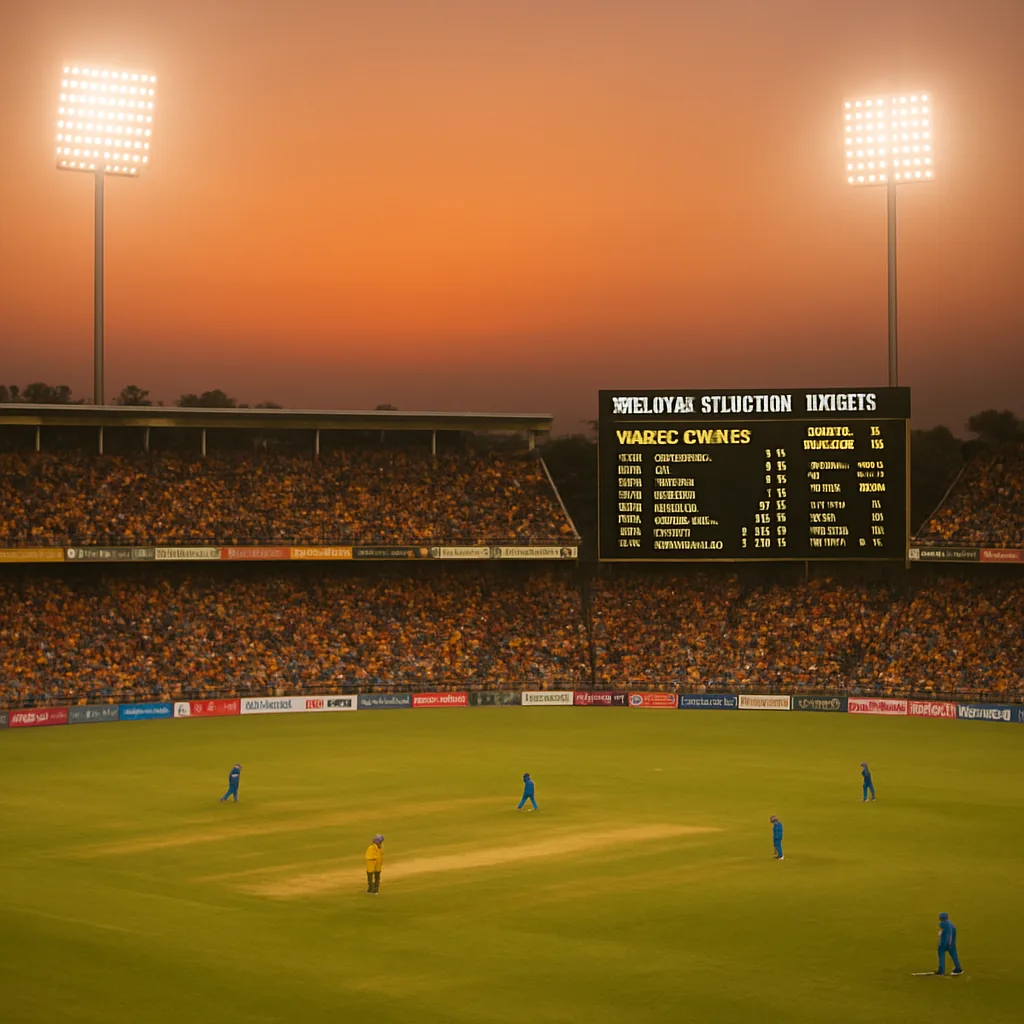
Representative image for illustration
A high-profile India versus Pakistan cricket meeting at the Asian Games is plausible and consequential, forcing organisers, broadcasters, and security planners to balance large commercial demand with significant logistical and safety costs. Expect exceptional TV and ticket demand, tighter scheduling, and higher security needs that increase costs and complicate seat allocation.
Why this matchup is likely and what it means for stakeholders
India and Pakistan are the two biggest TV draws in Asian cricket. When they meet, broadcasters see spikes in viewership; when they do not, domestic interest still drives big numbers for other marquee matches. That dynamic makes a collision at a multi-sport event such as the Asian Games an immediate headline for rights holders, sponsors, and host organisers. Fans want the match, broadcasters want the rights, and hosts want the economic boost from spectators and hospitality, but differing priorities on timing and location create friction.
Scheduling, seeding and tournament mechanics that shape the clash
Tournament formats and seeding rules determine how likely India and Pakistan are to clash before the final. In many multi-team short-format cricket events, organisers seed top teams into separate groups to avoid early knockouts, then use knockout brackets that place group winners on opposite sides. If seeding separates them, a group-stage meet becomes the only early possibility. If both progress, a semi-final or final meeting is inevitable.
A tight tournament window compresses recovery time between matches. That increases the chance of rotation or rest for star players, which affects competitive intensity. It also pressures broadcasters and venues to plan back-to-back marquee fixtures on the same day or successive days, which raises staffing and security costs.
Broadcasting value and anticipated viewership
Television and streaming rights holders treat India-Pakistan matches as tentpole events because of broad cross-border interest among South Asian diasporas. Rights valuations often spike when those fixtures are possible. Sponsors pay premiums for association with headlining matches. At the same time, broadcasters must plan technical redundancy and peak-capacity streaming infrastructure to handle sudden viewership surges.
For example, a regular pool match between mid-table teams draws a fraction of the peak audience that an India-Pakistan tie typically attracts. That means venues that expect a sold-out crowd for one match cannot assume the same for the next day without extra ticket allocation and staffing. Broadcasters face the opposite trade-off: they can plan for higher ad rates around the India-Pakistan match, but only if they guarantee distribution stability and clear rights windows across territories.
Security, ticketing and host-city logistics
High-profile cross-border fixtures raise security requirements. Local police and event security must plan crowd control, segregated seating corridors, controlled ingress and egress times, and contingency evacuation routes. Transportation planning must account for waves of arrivals and departures before and after the match. That infrastructure drives costs that host cities must budget months in advance.
Ticketing presents its own challenge. Demand typically overwhelms supply for a fixture of this profile. That encourages ticket scalping and creates political pressure to prioritise allocations for returning diaspora, local season-ticket holders, and bilateral association guests. Host organisers must decide on fair allocation policies and transparent ballot systems to reduce public outcry.
A concrete scenario: how a medal-deciding match could happen
Imagine the Asian Games cricket competition scheduled over ten days with group stages followed by semifinals and medal matches. If India and Pakistan are in separate groups and both top their pools, they will likely be placed on opposite sides of the knockout bracket. That sets up the possibility of a gold-medal final meeting on the tournament's last day. Alternatively, if seeding places them together, they could meet in a decisive group match or an early knockout, which would reduce the tournament's headline value later on.
In the finals scenario, organisers face a decision: programme the India-Pakistan final in the main stadium with full international security and premium ticketing, or distribute marquee matches across venues to spread economic benefits. Both options carry pros and cons. Centralising the match maximises gate revenue and TV sightlines but concentrates security risk and local disruption. Spreading matches eases single-venue strain but reduces the spectacle.
Trade-offs organisers must balance
Organisers must weigh three competing priorities: maximising commercial income, preserving team and player welfare with sensible schedules, and ensuring public safety. Prioritising any two of those goals makes the third harder to achieve. For example, prioritising maximum commercial income by scheduling back-to-back marquee matches increases athlete fatigue and raises safety costs. Prioritising player welfare with generous rest days reduces the number of high-profile match-days that rights holders and sponsors can monetise.
Another trade-off is ticket allocation versus community goodwill. A pure market approach sells to the highest bidder, increasing revenue but angering local fans and civic stakeholders. A prioritised ballot or community allocation reduces windfall gains and makes for calmer public sentiment, but it lowers immediate gate receipts.
What broadcasters and rights holders should prepare for
Rights holders should assume a surge in demand for linear and streaming capacity and plan technical redundancy and localized feeds. Negotiating territorial windows early can prevent blackouts and complex rights conflicts across countries with large South Asian diasporas. Rights teams should also model several viewership scenarios so that ad inventory and pricing can be adjusted in real time.
A practical step for broadcasters is to run capacity load tests against peak concurrent users and to secure backup satellite or fibre links for last-mile delivery. Another is to set contractual clauses with platforms that allow graceful scaling of ad loads and bitrate adaptations during spikes.
What fans and travelling supporters should do now
If you plan to attend, register for ticket ballots as soon as they open and prepare for strict security screening on match day. Expect controlled entry windows and limited re-entry. If you're watching from abroad, confirm that your streaming provider has territory rights and offers a low-latency feed so you can watch ball-by-ball content and interactive features.
Travel planners should book refundable or flexible accommodation and allow for late arrival, since match schedules can shift by a day for weather or TV-window changes.
A named caution and an example
Multi-sport events often shift match timings to meet broadcast prime slots, which compresses recovery time for players and can affect the quality of cricket shown. That happened in prior short-format tournaments where evening fixtures were arranged for European prime time and morning matches suffered attendance. Expect similar pressure at the Asian Games if broadcasters demand specific time slots to capture maximum audiences.
Frequently Asked Questions
H2: Frequently Asked Questions
Q: How likely is an India-Pakistan match at the Asian Games? A: It depends on seeding and progression. If the teams are placed in separate groups and both top their groups, a final meeting becomes likely. If they are pooled together, an early match is guaranteed.
Q: Will ticket scalping be controlled? A: Organisers can use digital ID checks, paperless ticketing, and verified fan systems to limit scalping, but these measures require robust tech and pre-event enforcement planning.
Practical takeaway you can act on today
If you care about attending or broadcasting an India-Pakistan match at the Asian Games, sign up for official ticketing notifications, secure flexible travel options, and for broadcasters, begin capacity planning now. Early registration and contingency budgeting are the cheapest ways to avoid missing out when the fixture is confirmed.
Comments (0)
No comments yet. Be the first to share your thoughts!