
Can Virat Kohli Still Reach Sachin Tendulkar's 100 International Centuries?
This article was drafted with Citeya, an AI writing tool, from published reports and is published under Kishan Prajapat's name. See our editorial standards or report an error.
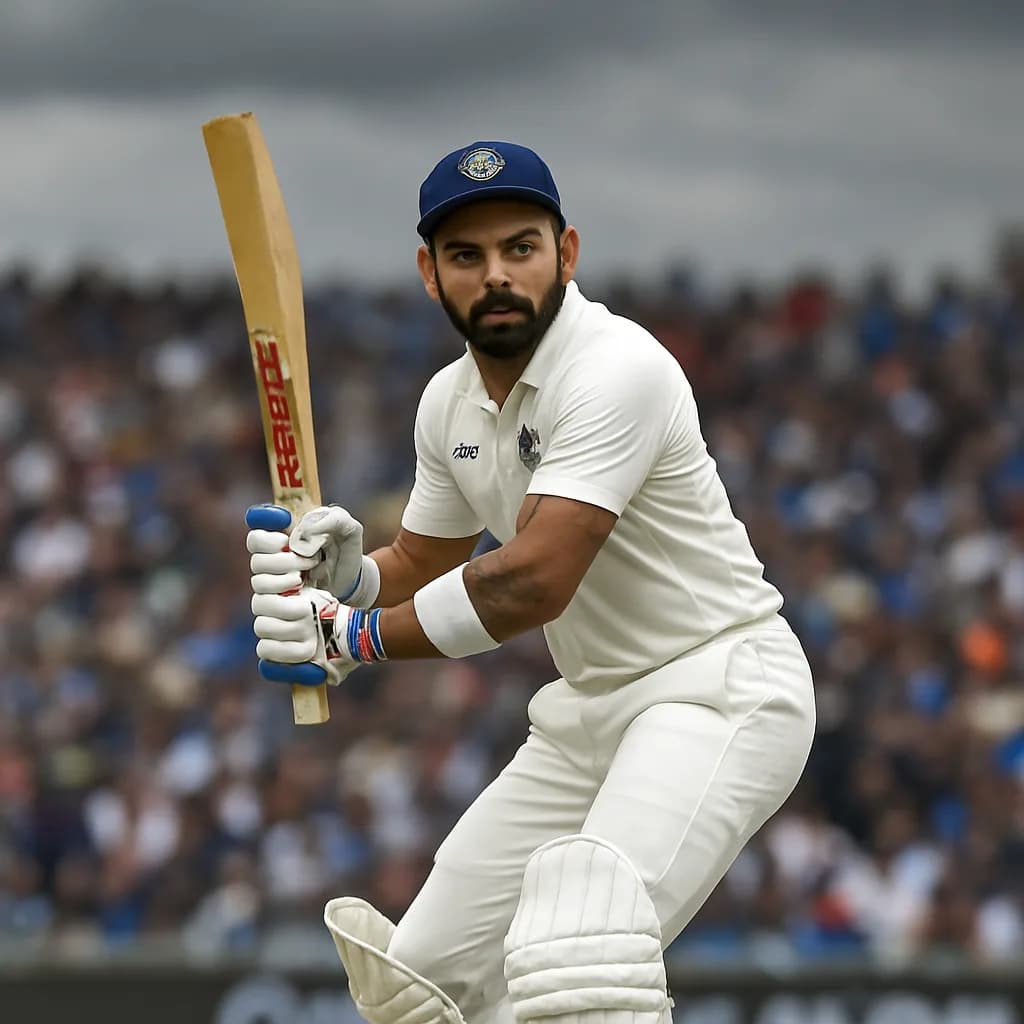
Representative image for illustration
TL;DR: Yes, but only if he maintains exceptional form and plays a heavy schedule over multiple seasons; realistically it means several 50-plus innings per year and higher conversion rates across formats. Read the scenarios and the single concrete season example to judge plausibility.
Many fans ask: can Virat Kohli still break Sachin Tendulkar's 100 international centuries? That question rests on three numbers: how many international centuries Kohli has now, how many he would need to reach 100, and how many innings and seasons he can reasonably play while keeping elite conversion rates. This piece sets those variables out, shows a plausible multi-season projection, and names the trade-offs that make the chase difficult.
How big is the gap now and why format matters
Kohli's tally of international centuries and the exact gap to 100 determines the scale of the task. The tally covers Test, ODI, and T20 international centuries. Each format creates different chances: Tests offer time to build big innings but come less often; ODIs provide more matches per year but require balancing strike rate and longevity; T20Is rarely produce hundreds for even the best batsmen. The chase therefore depends on how many matches Kohli can convert into centuries in the formats he plays most.
What sort of scoring rate Kohli needs by season (scenarios)
There are two broad scenarios to consider. Scenario A is conservative: Kohli scores 6 international centuries per calendar year. Scenario B is ambitious: he scores 9 centuries per year. Over three seasons Scenario A yields 18 centuries, Scenario B yields 27. If Kohli today needs around 20–22 centuries to reach 100, Scenario A falls short while Scenario B would get him there in two to three seasons. Those totals show why the per-season century rate matters most.
Workload, longevity and conversion rates: trade-offs
A higher century count requires more innings and higher conversion from fifty to hundred. Historically the best century-makers converted large numbers of fifties into hundreds; replicating that rate late in a career is hard because of fatigue, injuries, and changing role. Playing more international matches raises century opportunities but increases workload and injury risk. Choosing formats matters: concentrating on Tests where centuries are likelier per innings might help, but India plays fewer Tests each year than limited overs matches, so that alone may not supply enough chances.
A concrete example season scenario with numbers
Imagine Kohli needs exactly 22 centuries to hit 100. Select a three-season plan. Year 1: play 30 international innings across formats and convert 20 percent of fifty-plus scores into centuries; that yields about 7 centuries. Year 2: similar workload, another 7 centuries. Year 3: slightly reduced output, 6 centuries. Total across three seasons: 20 centuries, leaving a small shortfall that requires a few extra matches or a higher conversion rate in one season.
A single-season, optimistic example might look like this. Suppose Kohli plays 40 innings in one busy calendar year, with a fifty-plus score rate of 30 percent (12 fifties or better) and a conversion to hundreds of 58 percent (about 7 centuries). The arithmetic is straightforward, but maintaining that level against top bowling attacks while handling 40 innings in a year is the hard part. If he repeats that season twice more he reaches 21 centuries, close to the gap.
Caveats readers should track
Confirm the exact gap first. Public discussion sometimes reports slightly different counts because of whether T20 centuries, which are rare, are included or because recent innings updated totals. Check a live official statistic feed to confirm Kohli's current total before running projections. Second, conversion rates change with age and role. Teams often manage veterans more conservatively to preserve fitness and international longevity, which can reduce match count and chance volume. Third, selection and scheduling are outside a single player's control. Board decisions, tournament placements, and global calendars will shape how many international innings are realistically available.
A key trade-off: chase intensity versus longevity. Playing a packed calendar raises short-term opportunity for centuries while increasing injury and form risk. A measured approach preserves a longer window but reduces per-year century potential. That trade-off is the real choice behind any projection.
What to watch next
If you want to judge the chase in real time, track three indicators. One, Kohli's match count per year across formats. Anything under 30 innings per year makes a high-century target unlikely. Two, his fifty-to-hundred conversion rate in the last 18 months; a rising conversion rate shortens the timeline. Three, the formats he prioritises: a calendar heavy on ODIs and Tests is more helpful than one dominated by T20 leagues.
Practical takeaway
Can Virat Kohli still break Sachin Tendulkar's 100? Yes, but only by sustaining an unusually high output and playing an intense international schedule for multiple seasons. If you want a simple metric to watch, track Kohli's centuries per 30 international innings over rolling 12-month windows; if that number sits at 6 or higher, his odds are good. If it slips below 4, the chase becomes unlikely without a marked shift in role or schedule.
Comments (0)
No comments yet. Be the first to share your thoughts!