Arshdeep Singh injury update: India pacer suffers shoulder knock
This article was drafted with Citeya, an AI writing tool, from published reports and is published under Kishan Prajapat's name. See our editorial standards or report an error.
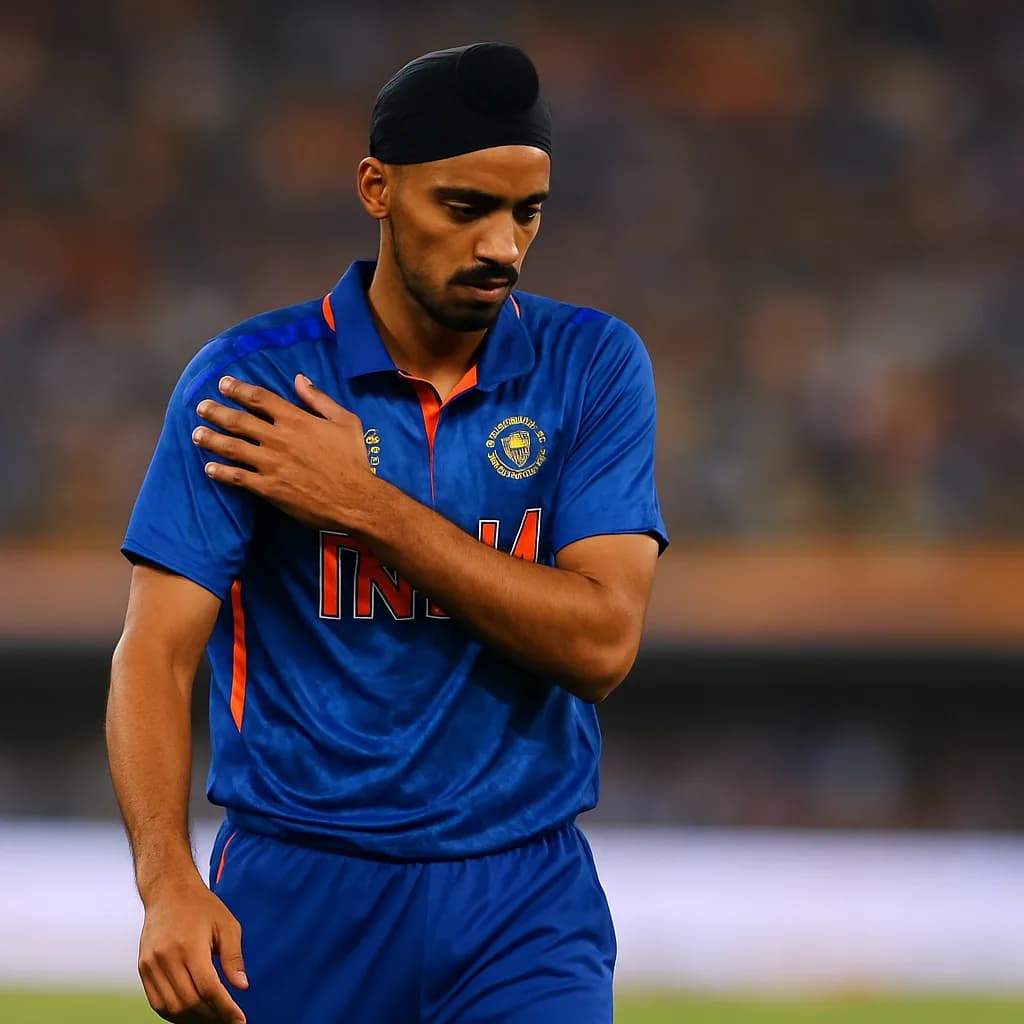
Representative image for illustration
Arshdeep Singh suffered a shoulder knock during the fourth T20I against the West Indies and was recorded as retired out, leaving his availability for the upcoming New Zealand tour uncertain. TL;DR: medical checks are pending, the injury came in the fourth T20I, and selectors must weigh short-term cover against longer-term workloads for India’s pace battery. Read the match report and injury note here.
The fourth T20I retirement raised immediate questions about whether he will travel or be fit for the New Zealand white-ball tour. Yahoo Sports reported the game details and the injury status.
What happened on the field and the immediate medical picture
Arshdeep injured his shoulder during the fourth T20I, at which point India recorded him as retired out, a rare match designation that flagged the issue to selectors and medical staff. The fact that he did not complete the match created an immediate need for an assessment by team doctors, because shoulder knocks can range from a bruise that heals in days to issues that affect the bowling arm for weeks. Yahoo Sports' match account describes the retirement and the timing in the fourth T20I.
Sunil Gavaskar named Shamar Joseph and questioned the bowler's sportsmanship, highlighting how the incident entered public debate. Gavaskar's remarks were reported by Yahoo Sports and frame the incident beyond just a medical note into a disciplinary and ethical conversation. See Gavaskar's comments on the incident.
Doctors typically use clinical tests and imaging to rule out dislocations, rotator cuff damage, or labral tears. Short-term steps are rest, ice, and a controlled physiotherapy program; if imaging shows structural damage, recovery can extend to weeks or months. That range is why selectors will wait for the Indian team’s medical clearance before making final decisions for the New Zealand tour. The reporting so far does not include a public scan result or a named team doctor’s statement, so the timeline remains provisional. The initial injury report is in the Yahoo Sports match summary.
How this changes India’s plan for the New Zealand series
India's immediate selection calculus is tougher because the series in New Zealand follows the T20s quickly. India has a mix of workload-managed fast bowlers and some older white-ball specialists returning, such as Bhuvneshwar Kumar, who was named for the T20I squad after a four-year gap; that pick shows selectors are willing to use experienced cover when necessary. Bhuvneshwar’s recall after four years was reported by Yahoo Sports.
If Arshdeep is ruled out, India can either call a like-for-like left-arm seamer or reshuffle the existing group to preserve bowling variety. The team is already managing fitness questions for other pacers; for example, Jasprit Bumrah’s participation in certain white-ball fixtures has been described as doubtful while he prioritises Tests and a broader workload plan. Yahoo Sports discussed Bumrah’s prioritisation of Tests.
Selectors have to balance two risks: rushing Arshdeep back and increasing re-injury chance, or leaving him out and weakening the pace attack’s left-arm angle. Given the proximity of the New Zealand series, short-term availability will likely dominate the immediate decision, but the longer-term workload plan for Bumrah and others will also shape how aggressive selectors are about replacements. Selection context and squad management were covered in the squad reports.
Replacement options and the selection trade-offs
Three practical replacement routes exist: call a specialist left-arm seamer from outside the squad, promote a reserve already on tour or in the bubble, or shift to an extra right-arm fast bowler and adjust field plans. Each choice has trade-offs. Bringing an external specialist gives match-role continuity but adds travel time and bio-bubble logistics. Promoting an internal reserve preserves the group dynamic but risks a mismatch in bowling style.
Potential immediate options in public discussion include recalling experienced white-ball bowlers and using Bhuvneshwar’s return as an example of selectors favouring known international experience. Bhuvneshwar’s selection shows that the Indian board will opt for experience when match readiness matters.
What do selectors watch for medically? Clearance from team doctors for full bowling spikes, pain-free range of motion, and at least one light net session under supervision. If Arshdeep cannot bowl at full intensity in nets within a short window, the safe choice is to name cover. That would preserve his long-term value but might cost India the left-arm angle in New Zealand conditions. The match report showing Arshdeep retiring out triggered this selection debate.
Injury context: comparisons and what history suggests about recovery
Shoulder injuries have sidelined high-profile players recently. For instance, New Zealand rugby captain Ardie Savea had shoulder surgery and was ruled out for the rest of the year after a dislocation, a case showing how shoulder problems can require long recoveries depending on severity and treatment choice. Yahoo Sports reported Savea’s surgery and year-ending prognosis.
That comparison is not direct because cricket fast bowling stresses the shoulder differently than contact sports. Still, it shows the spectrum: some athletes rehab quickly, others need surgery and extended absence. The key difference is the structure injured; rotator cuff microtears and impingement often respond to weeks of physio, whereas labral tears can need surgical repair and months out.
A practical precedent in India’s selection policy is workload management and experience-first replacements. Recent discussions about Jasprit Bumrah’s workload show the board’s willingness to rest marquee fast bowlers to preserve Test fitness. The reporting on Bumrah’s prioritisation of Tests highlights that approach.
What to watch next and immediate steps for fans and selectors
Expect three concrete signals before a final call: a team doctor’s fitness bulletin, a controlled net session reported by the squad, and the official squad list for New Zealand. If Arshdeep passes all three, he likely travels; otherwise selectors name cover. Match readiness in nets is usually the decisive gate.
Short checklist for fans tracking the situation:
- Look for an official medical update from BCCI or team doctors. BCCI meeting and selection dynamics were flagged in media reports.
- Watch for reports of a supervised bowling session; that often comes 24 to 72 hours before a travel decision. The match report and squad coverage set the timeline after the fourth T20I.
- Note any squad changes published before the New Zealand tour itinerary is final.
Those three checkpoints will indicate whether Arshdeep travels or selectors name cover.
Takeaway
Arshdeep's shoulder knock from the fourth T20I forced a retired out and created a pending fitness decision that will shape India's balance for New Zealand. The selectors must weigh immediate match needs against long-term workload for the pace attack, with medical clearance, a nets test, and an official squad announcement serving as the decisive signals. Fans should expect a final call only after those three facts arrive, and until then treat availability as uncertain rather than ruled out. Initial reports and commentary are here.
Comments (0)
No comments yet. Be the first to share your thoughts!