South Africa vs Australia: Bad light stops play on day one of first Test as hosts reduce Pat
This article was drafted with Citeya, an AI writing tool, from published reports and is published under Kishan Prajapat's name. See our editorial standards or report an error.
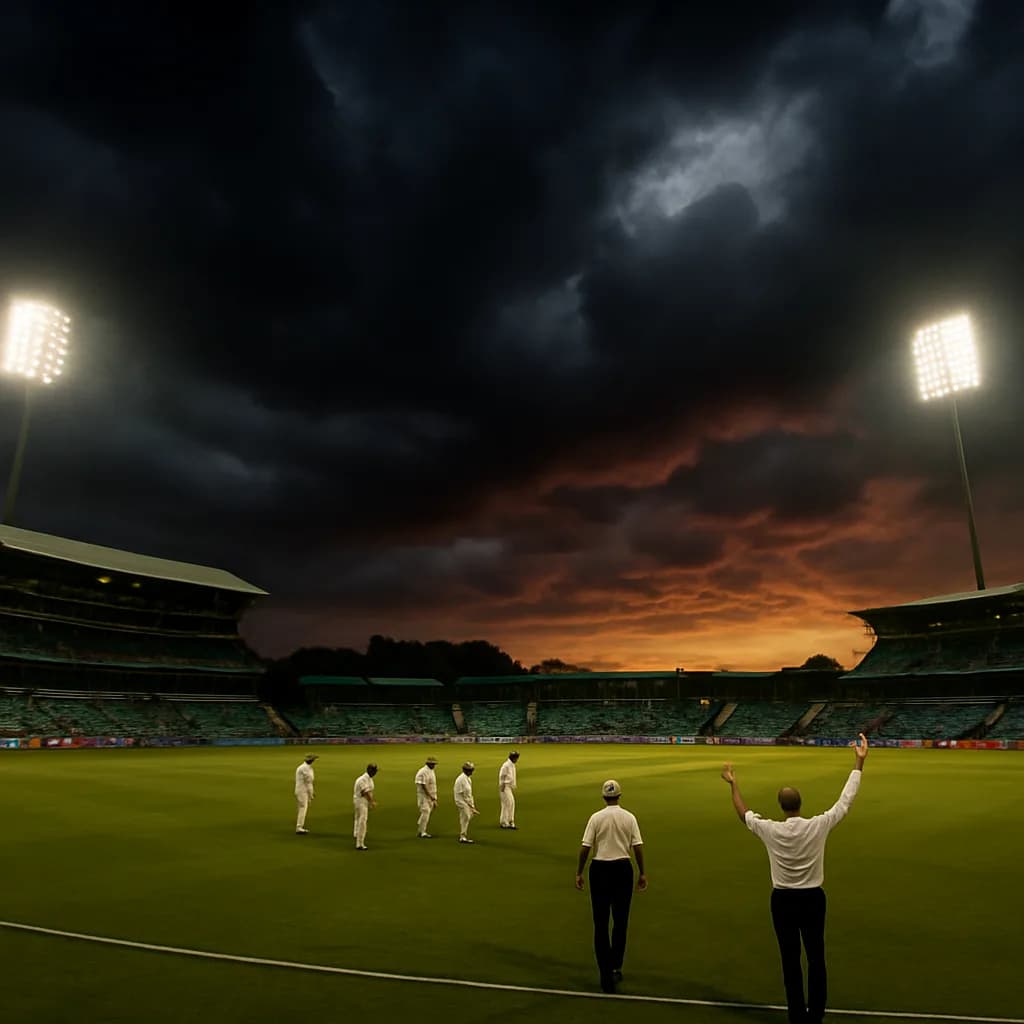
Representative image for illustration
Australia were 187 for 6 when bad light ended day one in Durban, with South Africa repeatedly pressing and the umpires calling play off as visibility fell. South Africa restricted Australia to 187-6, the umpires stopped play because of deteriorating light late in the day, and the early bowling success will shape the contest on day two. According to match reporting, Australia captain Pat Cummins and other top-order batters were under pressure as South Africa removed key partnerships by late afternoon before the bad-light intervention ended action early on the first day in this three-Test series in Durban Sky Sports match report, 2026.
Play stopped with Australia 187-6. Being six down for under 200 on day one hands the bowling side control and forces the batting side to rebuild on day two. The umpires used the Laws of Cricket and local playing conditions around visibility to justify ending play. Below, the article explains the sequence of play, the specific reasons for the stoppage, how the interruption changes tactics, and the immediate steps both teams should take tomorrow.
What happened on day one in Durban and the exact match state
South Africa bowled Australia into a vulnerable position at 187-6 on the opening day, removing partnerships and pinning the visitors back by late afternoon. According to the Sky Sports match report, South Africa's bowlers forced regular wickets that left Australia well short of a commanding total early in the series opener in Durban Sky Sports match report. The scoreboard number, 187-6, frames what type of fight Australia needs on day two and what pitch and light conditions produced the advantage.
At 187-6, the middle and lower order must either add a counter-attacking 60–100 runs or bat long sessions to stop the momentum. That exact scenario now confronts Australia, meaning the role of someone like captain Pat Cummins or a resilient lower-order batter becomes pivotal in the morning session. The late stoppage prevented any further restorative batting, locking in the advantage for the hosts overnight.
Why the umpires stopped play: Laws, standards and the local context
Umpires stop play for bad light under Law 2 (The umpires) and Law 41.5 (Dangerous and unfair bowling), but local playing conditions and the officials' judgment about visibility determine the call. Sky Sports described the stoppage as a response to deteriorating light late in the day, which made normal play unsafe and unfair Sky Sports match report. The International Cricket Council sets the Laws, and match referees apply local playing conditions, those combined standards are the authority the umpires rely on when sight becomes compromised.
A trade-off exists: continuing in poor light risks player safety and unfairly favors bowlers; stopping reduces time available to force a result. Officials must balance the match situation against those risks. A practical step for teams is to consult umpires proactively: captains can request a light meter check or brief the referee if they believe conditions are playable. The match report noted that the umpires elected to end play rather than continue under questionable visibility, which is consistent with how international matches have been handled when light drops quickly in coastal venues like Durban Sky Sports match report.
How the stoppage changed tactics for both teams and the series outlook
When play stops with a bowling side ahead, the advantaged team gets a coaching session to plan how to press the advantage on day two. South Africa, with Australia 187-6, can set attacking fields and target the top of the order early tomorrow, while Australia must plan for consolidation. The tactical trade-off is clear: bowlers want to strike early on a presumably helpful pitch; batters must decide whether to play cautiously or attempt an aggressive counter-attack to reclaim control.
When day one ends at 187-6, the batting side often needs an extra positive session on day two to avoid being bowled out cheaply. That pattern has occurred in other series reported by Sky Sports, where early collapses forced teams to adopt long defensive sessions to survive the next day Sky Sports coverage of other Tests and county matters.
What each team should do next: actionable steps for day two
Australia's immediate step is to plan a safe, measured start. Practically, that means assessing which bowlers offer the best chance to negotiate early movement and instructing top-order batters to prioritise strike rotation over big shots. South Africa should prepare two or three bowling plans for the first hour: one testing the seam with full-length deliveries, another probing the outside edge with well-directed short of a length, and a third if the light or pitch hardens into something flatter.
A concrete example: if Australia sends out a nightwatchman or promotes a resilient lower-order batter, the hosts must set attacking fields that tempt a false shot rather than simply defend. Conversely, if Australia decides to open with their regular top order, the team must be ready to bat through at least the first session to avoid further collapse. Coaches on both sides will rely on match analysis gathered today and check the umpires' forecast on playable hours. Expect both teams to arrive with a clear first-hour plan and a contingency if the light again deteriorates.
Broader context and related cricket governance signals
This match sits inside a packed international calendar and a three-Test series whose dates were published by governing bodies earlier in the season. For example, England's tour scheduling and Test dates have been publicised in similar Sky Sports reporting, which underlines how governing bodies fix windows that influence player rest and match preparation Sky Sports: England in South Africa dates confirmed, Dec 17 start referenced. Other Sky Sports pieces show the ECB publicly naming spokespeople and confirming squad moves, which is the kind of governance transparency teams follow in Test scheduling and match-day decisions Sky Sports: ECB spokesperson and squad updates.
Match reporting can blur play-stoppage reasons and pitch controversy. County cases have led to sanctions over pitch standards, including a 27-point deduction and a £5,000 fine for a poor pitch Sky Sports County Championship coverage, 27-point deduction and fine. That example reminds you that conditions and official rulings both shape a match beyond immediate stoppages.
Takeaway: what fans should watch on day two and how to interpret developments
Watch the first hour tomorrow. If Australia survives with the score nudging past 240, they keep a fighting chance; if South Africa strikes early, the hosts can push for a big lead and bowl Australia out cheaply on day two. Pay attention to whether umpires again consider light, another stoppage changes session lengths and tactics. Also watch individuals who can shift momentum: a disciplined opener who grinds out 60–90 runs or a bowler who takes an early wicket.
Practical action for fans: check the official match updates and start times from broadcasters and the match referee, and plan to tune in for the first session. That hour will likely decide whether South Africa converts its overnight advantage into scoreboard dominance or Australia rebuilds and flips the script.
Comments (0)
No comments yet. Be the first to share your thoughts!