2nd Test weather forecast at Gqeberha: Day-by-day rain chances for SA vs AUS at St. George's Park
This article was drafted with Citeya, an AI writing tool, from published reports and is published under Kishan Prajapat's name. See our editorial standards or report an error.
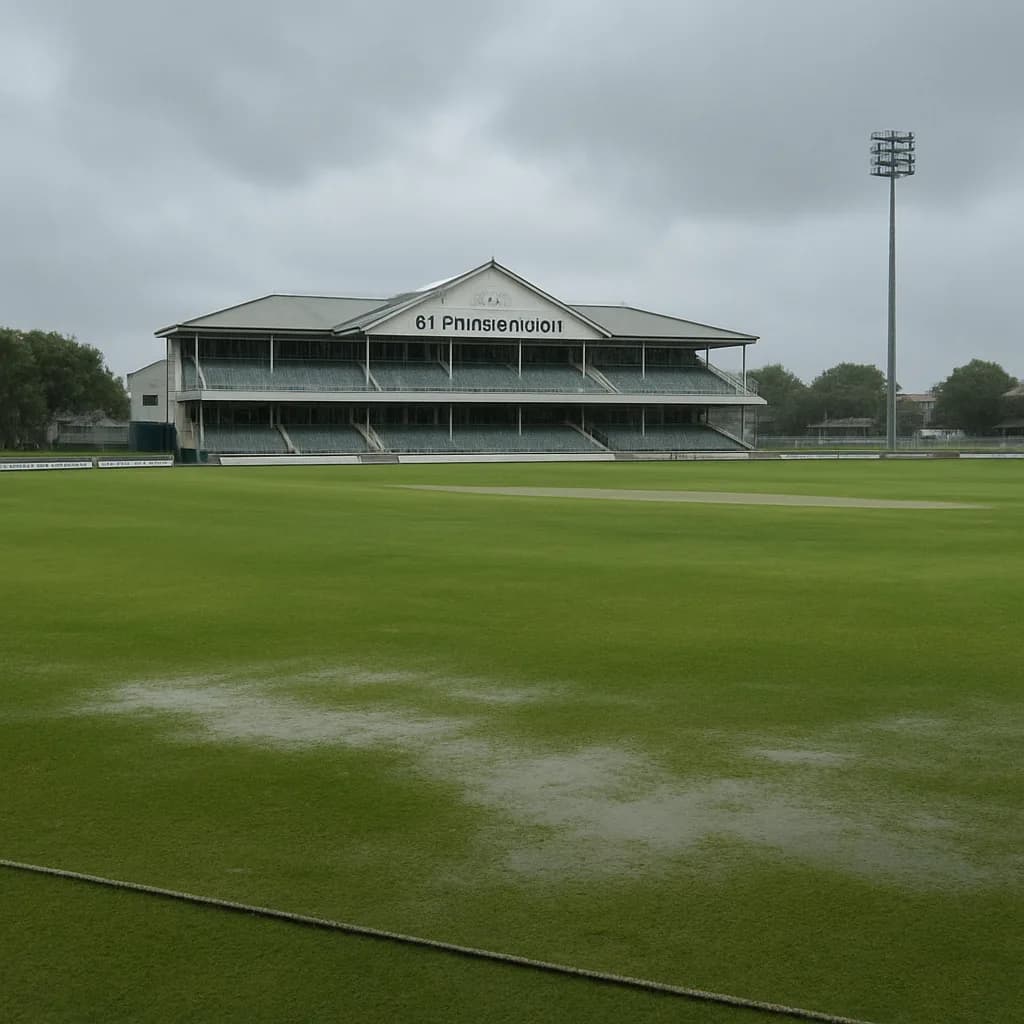
Representative image for illustration
Play at St. George's Park will be heavily influenced by coastal rain through the 2nd Test in Gqeberha; the opening day was largely lost to showers and cloud cover, and forecasts point to ongoing short, persistent rain spells that could wipe out sessions or force repeated stoppages. Expect disrupted play each day: Day 2 has the highest short-term probability of washouts, while later days offer slightly better windows for extended play according to local forecasts and match reports.
That matters because the first Test lost more than 50 overs to weather earlier in the series and St. George's Park is experiencing similar coastal instability now, which has direct tactical consequences for captains, bowlers and selectors as well as logistical effects for broadcasters and spectators. For the record, only 12.2 overs were completed on day one of this Test before rain and overcast conditions curtailed play, leaving South Africa 20 for 2 at stumps, according to contemporary match coverage and weather-reactive reports Wisden and Business Standard.
Day 1: the match disruption and immediate weather picture
The opening day at St. George's Park was effectively shortened by persistent rain and heavy cloud that delayed the start and forced long pauses. Match reports say play was delayed and that only 12.2 overs were bowled before stoppage, with South Africa 20-2 at stumps after Scott Boland’s early impact was noted in live coverage Wisden and Cricket.com.au. Local reporters recorded corridors of drizzle that repeatedly interrupted sessions, and a live summary described the morning as nearly completely lost to rain Business Standard.
Tactically, when fewer than 15 overs are possible in a day, captains typically choose either short-term aggression or tight defensive fields based on the wicket and cloud cover. The captain who wins the toss can either press for results by bowling first into overcast conditions or protect their top order from new-ball swing if forecasters predict extended rain later in the match. The match coverage after day one noted Australia placing seamers like Boland in attacking positions when conditions allowed ThePost.
Day 2: the short-range forecast and how it changes the game plan
Short-range meteorology for Gqeberha shows a high chance of more showers on Day 2, with forecasters and cricket journalists flagging continued coastal instability that can produce bursts of rain and prolonged overcast hours CristinaIglesias and Wisden. Practically, that means captains should expect multiple game-stoppages and set bowling plans that assume short spells rather than marathon overs.
If Day 2 is washed out or heavily truncated, the match moves quickly toward a weather-affected draw scenario, increasing the value of early wickets and reducing the probability of an outright result. Teams might push a nightwatchman or ask aggressive batters to attack early to set up a first-innings total inside a short window. Broadcasters and match officials should be ready for adjusted playing hours or three-session compression if a long dry window appears, a contingency referenced in live blogs and local reporting Cricket.com.au and CristinaIglesias.
On match days, expect delayed starts; bring rain gear and a waterproof seat cover, and check broadcaster apps for rolling start times Wisden.
Days 3–5: cumulative risk, reserve days and how the series outcome can shift
Longer-range forecasts and patterns during the series show cumulative risk: when early days lose overs to rain, the later days carry pressure to force a result and captains alter declarations and follow-on strategies accordingly. Match commentators and live blogs have highlighted that rain cost more than 50 overs in the first Test of this series, shaping both teams’ reluctance to plan for protracted batting before trying for a result Sports Yahoo and ABC News.
If Day 2 yields only a few hours and Days 3–5 remain patchy, captains may declare earlier or use attacking fields to force results with constrained overs. That trade-off raises the risk of collapse if a side misjudges a changing wicket. One example scenario: if South Africa reaches 250 in reply but Day 4 is forecast wet, a conservative declaration to force Australia to bat in damp conditions could be the right call. Live coverage already shows teams making those calculations in real time when rain looms ThePost.
Official tournament rules and umpires’ guidelines allow for extended intervals when poor light or weather persists, and broadcasters have prepared for adjusted telecasts informed by those match management rules Cricket.com.au. That organizational framework is an authoritative factor in how reserve plans are executed.
What fans, broadcasters and teams should do: immediate steps and caveats
Fans should bring waterproof outerwear, check venue updates, and download any official broadcaster app for dynamic start-time alerts. Broadcasters should have flexible schedules and contingencies for rolling coverage; commentators have already shifted to live-blog formats and frequent note updates during this series Cricket.com.au and Sports Yahoo. Teams must plan bowling rotations to allow seamers for short, intense spells and expect the toss to be more influential than usual when cloud is heavy CristinaIglesias.
Three quick, actionable steps: 1) Check the official match feed each morning for revised start times; 2) expect fewer than 90 overs on any wet day and plan batting order/strategy accordingly; 3) for broadcasters, schedule a standby window in prime time to capture late dry periods. These actions come from how previous days in the series were handled and the live reporting protocols that have been used repeatedly Wisden and Cricket.com.au.
A caveat: coastal weather models often flip rapidly, so an apparently bad morning can clear into multiple productive sessions by afternoon. Conversely, a dry forecast can be wrong; that uncertainty is why teams avoid committing to one single long-innings plan too early in this series CristinaIglesias.
Ending takeaway: what you should do right now
If you have tickets, check the official match website and your broadcaster app first thing tomorrow and bring waterproof layers and a portable seat cover. If you’re following team strategy, expect earlier declarations or short-burst bowling plans and watch for the toss to shape the first session; live match coverage has already shown these adjustments during the series Business Standard and ThePost. For broadcasters and journalists: prepare for rolling coverage and frequent updates, because Gqeberha’s coastal showers are likely to keep forcing on-the-fly scheduling changes through the remainder of this Test Wisden.
1) A wide-angle daytime photo of St. George's Park cricket ground in Gqeberha under low, overcast skies with visible wet patches on the outfield and an empty pavilion, light rain falling, high-resolution. 2) Close-up action shot of Scott Boland bowling on a damp pitch with a reflective sheen, crowd in raincoats in background, scoreboard showing 12.2 overs and 20-2, high-resolution.
Comments (0)
No comments yet. Be the first to share your thoughts!