
International
Melbourne · Australia
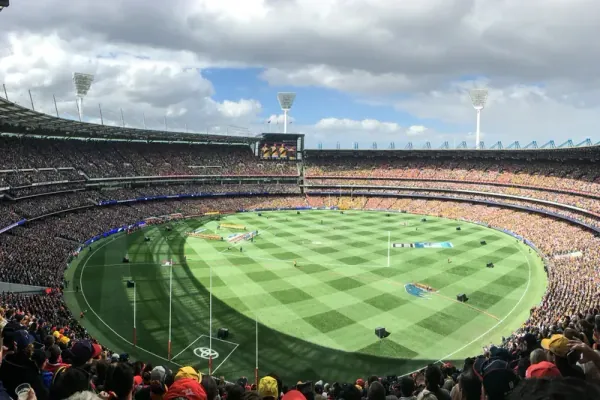
Melbourne Cricket Ground
Capacity
100,024
Established
1853
Pitch
Grass/Balanced
Status
Active
Quick Facts
CAPACITY
100,024
LOCATION
Melbourne, Victoria
COUNTRY
Australia
ESTABLISHED
1853
OWNER
Melbourne Cricket Club
PITCH TYPE
Grass/Balanced
COORDINATES
-37.819967, 144.983449
FIRST MATCH
Test: Australia vs England 1877
MATCH WINNER
Australia
STATUS
Active
About Melbourne Cricket Ground
Melbourne Cricket Ground (MCG) in Melbourne, Victoria, Australia, is the largest cricket stadium in the Southern Hemisphere and one of the most iconic sports venues on earth, with a seating capacity of 100,024. Established in 1853 and home to Cricket Australia and Melbourne Cricket Club, the MCG hosted the very first Test match in cricket history - between Australia and England - in March 1877.
The legendary ground has also hosted multiple ICC Cricket World Cup finals, Day-Night Tests, and the Boxing Day Test that draws over 90,000 fans annually. The MCG stands as the cathedral of cricket, a venue where every match carries the weight of 170 years of cricketing tradition, rivalry, and spectacle.
Venue Statistics
| Match Type | First Match | Winner | Pitch Type | Active |
|---|---|---|---|---|
| International | Test: Australia vs England 1877 | Australia | Grass/Balanced | Yes |
Key Milestones
1853: Established
Melbourne Cricket Ground became operational and hosted its first event in Melbourne.
First International Match
Test: Australia vs England 1877
First Match Winner
Australia
FAQ — Melbourne Cricket Ground
Where is Melbourne Cricket Ground located?
Melbourne Cricket Ground is located in Melbourne, Victoria, Australia.
What is the seating capacity of Melbourne Cricket Ground?
Melbourne Cricket Ground has a seating capacity of 100,024 spectators.
When was Melbourne Cricket Ground established?
Melbourne Cricket Ground was established in 1853.
Who owns Melbourne Cricket Ground?
Melbourne Cricket Ground is owned and managed by Melbourne Cricket Club.
What was the first international match at Melbourne Cricket Ground?
The first international match at Melbourne Cricket Ground was Test: Australia vs England 1877. Winner: Australia.
What type of pitch does Melbourne Cricket Ground have?
Melbourne Cricket Ground features a Grass/Balanced pitch surface.
Is Melbourne Cricket Ground still active?
Yes, Melbourne Cricket Ground is currently an active cricket venue hosting international and domestic matches.
Photo Gallery
Coming Soon