
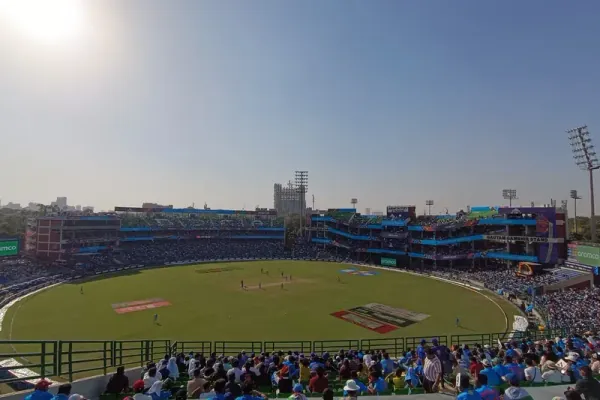
Arun Jaitley Stadium
Get the latest pitch report, T20 records, average first innings score, and live cricket score updates for Arun Jaitley Stadium.
Arun Jaitley Stadium in Delhi, historically known as Feroz Shah Kotla Stadium, is one of the oldest and most storied cricket venues in India and the world, with a seating capacity of 41,842. Established in 1883 during the British colonial era and owned by the Delhi and District Cricket Association (DDCA), the ground is the second oldest cricket venue in India, sitting in the shadows of the 14th-century Feroz Shah Kotla fort from which the stadium originally took its name. Renamed in 2019 to honour former Union Finance Minister and DDCA president Arun Jaitley, the stadium is the home ground of Delhi Capitals in the IPL and has been at the heart of cricket in the nation's capital for over 140 years. The ground hosted India's first home Test match in Delhi in 1948, when India faced the West Indies, beginning a long and distinguished history of international cricket at this venue. In February 1999, legendary spinner Anil Kumble achieved the remarkable feat of taking all 10 wickets in an innings against Pakistan at Feroz Shah Kotla - only the second time in Test history - in a performance that remains one of the greatest individual bowling displays ever seen in international cricket. The pitch at Arun Jaitley Stadium is notorious for its dry, dusty surface that generates extraordinary turn from day one of a Test match, making it a graveyard for visiting batters. The stadium also holds a world record for the most Test match draws at a single venue, earning it a unique place in cricket statistics. Rebuilt and renovated multiple times in its 140-year history, Arun Jaitley Stadium blends the old-world charm of its colonial-era heritage with modern infrastructure, standing as the cricketing pulse of India's vibrant capital city.
The Arun Jaitley Cricket Stadium (formerly Feroz Shah Kotla Stadium) is a cricket stadium owned and operated by the Delhi & District Cricket Association (DDCA) and located on Bahadur Shah Zafar Marg, New Delhi. It was established in 1883 as the Feroz Shah Kotla Stadium, and named after the nearby Kotla fort. It is situated on land that is a historical part of Ferozabad, the 14th-century city established by Sultan Feroz Shah Tughlaq in 1354 CE. It is within the fortified city and shares historical proximity with the surviving structures of the Kotla complex, such as the Jami Masjid. It is the second-oldest functional international cricket stadium in India, after the Eden Gardens of Kolkata. As of 12 February 2026, it has hosted 36 Tests, 29 ODIs, and 10 T20Is.
In a 2017 felicitation ceremony, the DDCA named four stands of the stadium after former India captain Bishan Singh Bedi, former India all-rounder Mohinder Amarnath, and former India and Delhi opener Gautam Gambhir. The home team's dressing room was named after the late Raman Lamba and the away dressing room after Prakash Bhandari.
On 12 September 2019, the stadium was renamed in memory of former DDCA President and Finance Minister Arun Jaitley after his death on 24 August 2019. The stadium was officially renamed at a function that took place on 12 September 2019. One of the stands of the stadium was named after former Indian captain Virat Kohli on the same date. The name change has been criticised by former Indian captain Bishan Singh Bedi. After announcing the name change, DDCA clarified that only the stadium had been renamed and that the ground would be still called the Feroz Shah Kotla Ground.
If you've ever tried navigating Delhi on a match day, you know exactly what the hype is about. The Delhi & District Cricket Association runs this place. Sure, big stadiums can feel a bit soulless sometimes. Not here. They've kept the stands feeling surprisingly tight to the boundary. You actually feel like you're hovering right over the fielders. Just grab your seat early because the food queues get ridiculous once the toss happens.
The curators love rolling out a rock-solid red soil wicket. Forget massive turn on day one. This is a place where you have to grind out your runs. Bowlers have to bend their backs to get any real bounce. It's a tactical nightmare for touring captains trying to figure out field placements, because once a batter is set, the ball just flies off the square.
You honestly can't prep for the noise. With 41,842 people screaming their lungs out, you can't even hear yourself think. The locals don't just wait for boundaries to cheer. They go wild for a solid forward defense. They cheer tight singles. That kind of cricket IQ changes the game. It makes the home side feel ten feet tall and puts touring sides under brutal pressure from ball one.
Under the lights, the ball does some really weird things here. It skids on. Fast. Batters who are slow on their feet get trapped LBW all the time during that twilight period. It's those tiny little local quirks that the data analysts obsess over, but the locals just know it purely from watching years of cricket from the bleachers.
It used to be a nightmare getting a ticket and finding your seat, but they've actually modernized things a lot lately. Scanning in takes seconds now. You grab a drink, find your spot, and just soak it in. It's the perfect mix of chaotic cricket passion and actual modern convenience. Hard to find a better day out.
| Match Type | First Match | Winner | Pitch Type | Active |
|---|---|---|---|---|
| International | India vs Pakistan, Nov 10-15, 1952 | Pakistan | Red Soil | Yes |