How Cricket Was Invented: Tracing the Origins of a Global Sport
Representative image for illustration
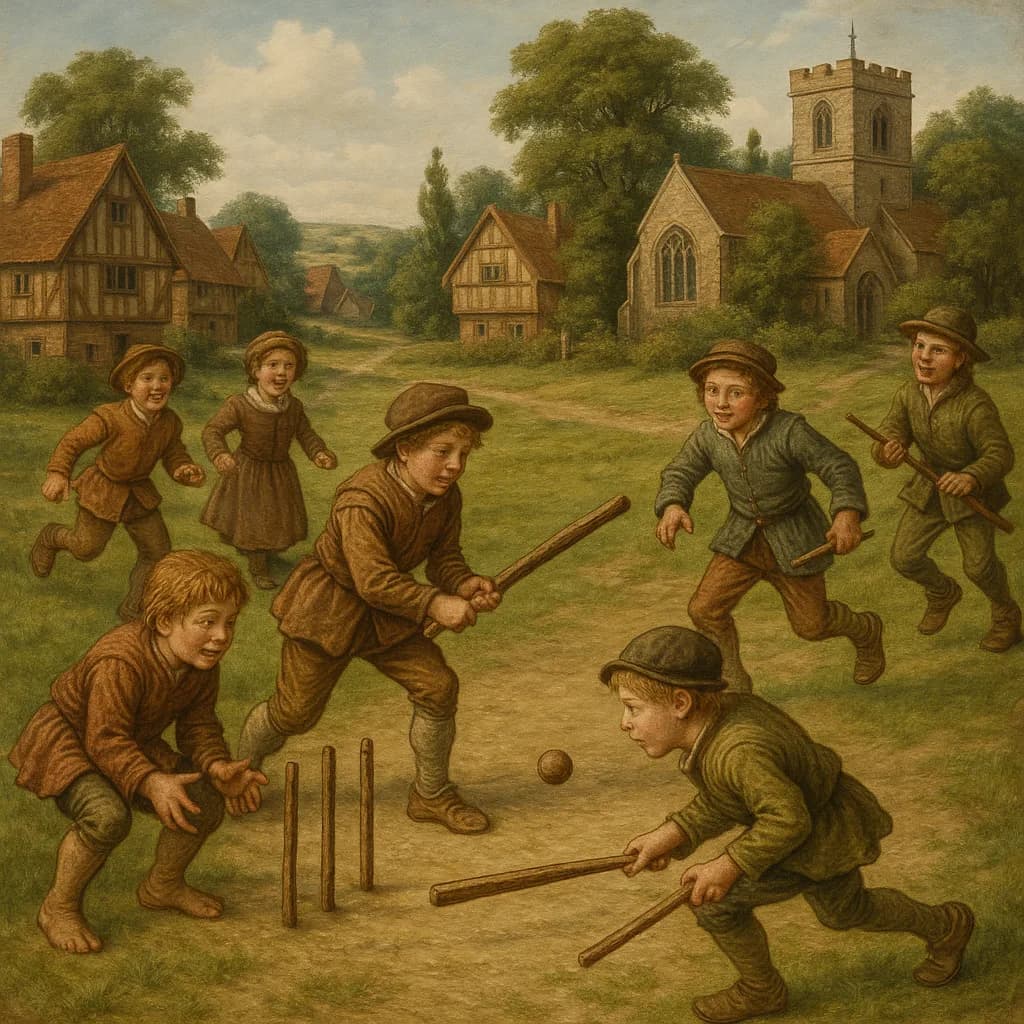
If you think cricket is a Victorian invention, you're missing half the story. Let me give you the gist: cricket started way back in the 1500s as kids messing around with sticks and balls, eventually turning into a game that both reflected and poked fun at the social scene of the day.
The Surprising Roots of Cricket: Not Just an English Game
People first started putting cricket down on paper in the late 1500s. Children in England's southeast — Sussex and Kent mostly — were playing a rudimentary version of the game by the 1550s, as chronicled by historians. Does that sound like a rough youth pastime? Absolutely. But these village games had the seeds of something far bigger. My take? The game's evolution was driven less by royal decree or formal clubs than by ordinary people’s sheer joy and competitive edge.
Funny enough, some official papers from the 1590s mention a game called "creckett." That’s one of the earliest written mentions, which you can check in archives referenced by experts. This wasn’t a fully standardized sport. It was more like kids knocking a ball with sticks — but the shoulders were broad enough to envision the cricket bat and ball structure we know now.
From Schoolfields to the World Stage: Early Cricket in the 16th Century
Come the 1600s, grown-ups were getting into cricket, and it started making waves socially. Schools like Eton and Westminster began formalizing rules and playing on structured pitches by the early 1600s. That's a major leap from random, muddy fields. Changing social norms around leisure play also elevated cricket’s status.
There’s a recorded match from 1646 near Guildford that pulled in crowds and bets. Bets kept the game alive—without the thrill and surprise, cricket might’ve fizzled out. What’s striking is that cricket survived the English Civil War, unlike many pastimes, and used the relative stability of the Restoration to thrive.
Clarifying the Myths: When and Where Cricket Truly Began
Lots of folks think the aristocrats cooked up cricket or that it was a royal invention—wrong. According to the Marylebone Cricket Club (MCC), the authoritative body that codified cricket laws starting in the 1700s, cricket emerged organically from rural English communities. The earliest codified laws date to 1744, but the sport had been fluid and evolving for almost two centuries by then.
There’s also confusion linking cricket’s start to other stick-and-ball games from Europe or the colonies. The fact is, while ball-and-stick games were common across cultures, cricket as a formal sport was a distinctly English invention. The MCC archives emphasize its gradual development — marred by trial, error, and local variations before standardizing.
Cricket didn’t really cross the Channel until the 1700s. It expanded first to the British colonies, mainly India and the Caribbean, then exploded worldwide, becoming, for example, a flagship sport in places like Brazil recently, where local clubs champion its growth in unexpected ways (The Guardian).
How Cricket Was Invented: Key Elements That Shaped the Game
Nobody invented cricket in one flash of genius—it grew slowly from a mix of culture, society, and plain common sense. Early bats resembled curved clubs, adapting to how bowlers pitched the ball along the ground. There wasn’t a wicket as we know it—something introduced as defenses evolved. Over time, bowling shifted from underarm to the roundarm style, drastically changing the game’s pace.
Funny how the word "wicket" only turned up in the late 1600s, showing how much the gear and rules kept shifting. Cricket’s founding moment arguably lies in the 1744 Laws written by the London Cricket Club, framing key aspects such as scores, dismissals, and boundaries.
In the 1800s, cricket mirrored society, splitting amateurs—called gentlemen—from pros, and that class clash added some real edge, forcing innovations in playing styles and etiquette.
Cricket’s Legacy and Modern Evolution
How cricket was invented matters not only for history buffs but anyone curious about sports development. Today, thanks to its rich roots, cricket blends tradition with innovation—think T20 formats that sparked wild innings like Finn Allen’s 100 off 33 balls in a recent World Cup (New York Times). Modern cricket owes a lot to its origins on English village greens.
And that old-school passion keeps fueling global growth. Take Seattle, where the sport is rapidly expanding ahead of the 2028 Olympics. The Seattle Orcas see cricket as a way to inspire new generations, riding on a sport invented centuries ago but refreshed with modern excitement (Axios).
So, if you wonder whether cricket’s invention was a stroke of luck or design, the answer lies in how small moments of human connection and competition shaped it over centuries. Because honestly, no matter where you stand, cricket’s story is about persistence and adaptation. It's like a century-old jazz tune—improvised, evolving, yet timeless.
Frequently Asked Questions
Q: Who officially invented cricket? No single inventor exists. Cricket emerged organically from children's games in 16th-century England, evolving through centuries before standard rules appeared in 1744 as documented by the MCC.
Q: When did cricket become an international sport? Cricket spread internationally in the 18th century via British colonies. By the 19th century, countries like India, Australia, and the West Indies embraced cricket, turning it into a global sport.
Q: Is cricket only popular in England? Far from it. While England is cricket’s birthplace, countries like India, Australia, and Brazil have vibrant cricket cultures. The sport is now growing in places you'd least expect, like Seattle, preparing for Olympic inclusion soon.
The next time you watch a crisp cover drive or a dramatic LBW appeal, remember: you’re witnessing a game centuries in the making, born from simple sticks, a ball, and endless backyard ambition.
Comments (0)
No comments yet. Be the first to share your thoughts!